WhatsApp has quietly become the backbone of daily life in rural India. It is where farmers get crop advice, where small shopkeepers take orders, where families stay in touch across long migration for work, and increasingly, where entire businesses operate without needing a website or an app of their own. Understanding how deeply and conveniently rural India has woven WhatsApp into everyday routines, alongside a smaller set of other social channels, is essential for any business trying to reach this audience in 2026.
WhatsApp Has Become Everyday Infrastructure
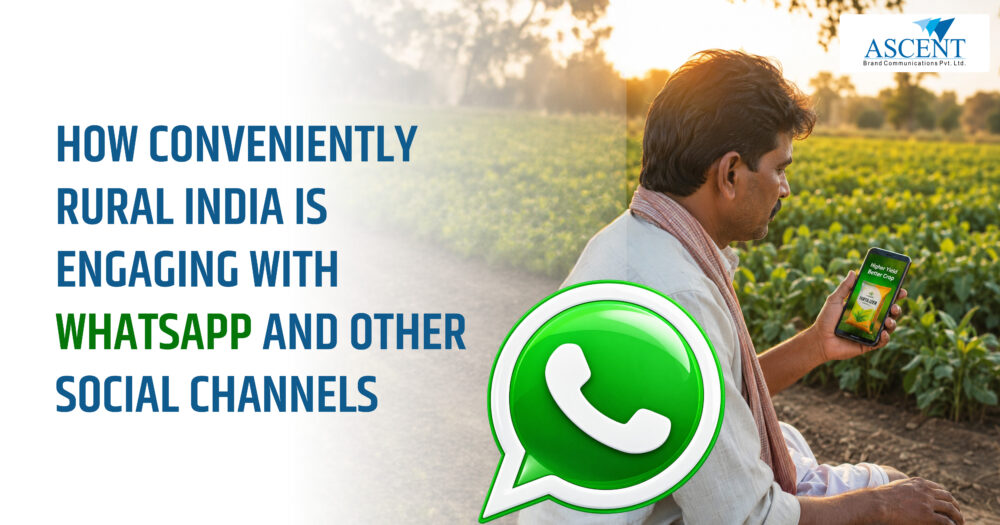
India is WhatsApp’s largest market in the world, and its reach extends well beyond cities. WhatsApp’s own communications describe India as its biggest market globally, and industry estimates place the number of Indian users well above 800 million, spanning both urban and rural areas. What makes this adoption so significant for rural India specifically is not just the scale but the convenience. WhatsApp requires no separate app download beyond the initial install, works well on low bandwidth connections, and supports voice notes, which removes the literacy barrier that limits engagement with text-heavy platforms.
This convenience has turned WhatsApp into something closer to public infrastructure than a simple messaging app. New agri-tech ventures are now being built entirely on top of it. One recent example connects farmers directly with trained agricultural workers through an AI-powered WhatsApp interface, requiring no separate app download at all, precisely because rural users already trust WhatsApp and are reluctant to navigate new app stores or interfaces.
Government Services Are Increasingly Delivered Through WhatsApp
Rural households are also engaging with WhatsApp as a channel for government information and services. Central schemes such as PM Kisan, crop insurance under PMFBY, and Kisan Credit Card updates are frequently shared and discussed through community and farmer WhatsApp groups, which function as informal but widely trusted information networks. Government departments have also moved toward digital tracking and communication systems that touch rural citizens directly, reflecting a broader shift toward WhatsApp and mobile-first channels as the default way rural India receives updates on entitlements, subsidies, and welfare programs.
Small Businesses Are Running Entire Operations on WhatsApp
For small and micro businesses in rural and semi-urban India, WhatsApp has become a full commercial channel rather than just a communication tool. A large majority of small businesses in India now consider WhatsApp essential to how they operate, using it for product catalogs, order taking, payment coordination, and customer support. WhatsApp commerce in India was estimated to have processed transaction value in the tens of thousands of crores in 2025, with kirana stores, home-based sellers, and artisans commonly printing their WhatsApp number on packaging so customers can message orders directly.
Several features make this particularly effective in rural markets. WhatsApp’s catalog feature lets a shop owner list products without building a website. Voice notes allow customers who are more comfortable speaking than typing to place orders or ask questions in their own dialect. Integration with UPI allows payment to be completed inside the same conversation, removing the friction of separate payment links or apps. Together, these features explain why WhatsApp has become the default starting point for rural entrepreneurs moving online, often before they consider any other digital channel.
Regional Language Support Removes a Major Barrier
WhatsApp natively supports a wide range of Indian languages, including Hindi, Tamil, Telugu, Kannada, Malayalam, Marathi, Bengali, Gujarati, Punjabi, Odia, and Urdu. This matters enormously in rural markets, where comfort with English is often limited. Businesses running campaigns in regional languages on WhatsApp have reported meaningfully higher response rates compared to English-only messaging, since a message written in a customer’s own language and dialect feels personal rather than translated.
WhatsApp Rarely Works Alone
While WhatsApp is usually the first and most trusted channel, it is typically paired with a small number of other platforms rather than used in isolation. YouTube remains the primary destination for rural audiences seeking video content, tutorials, and entertainment, and often works alongside WhatsApp as the place where a product is discovered before a purchase conversation moves into direct chat. Short-video platforms built for regional audiences, along with Instagram Reels for younger users, frequently serve as the discovery layer, with WhatsApp handling the actual conversation, order, and payment that follows. This layered pattern, discovery on a video or short-form platform followed by conversion through WhatsApp, has become one of the most consistent digital behaviors observed among rural consumers.
What This Means for Businesses
Treat WhatsApp Business as a core sales channel, not a support add-on – Setting up a proper catalog, broadcast lists, and quick-reply templates allows a small business to run most of its customer journey inside a single app that rural customers already trust.
Use voice notes and regional language messaging deliberately – Written English-only communication excludes a meaningful share of rural customers. Voice notes in the local language often perform better than text, particularly for older users and those with lower literacy.
Integrate UPI payment options directly into WhatsApp conversations – Reducing the number of steps between a customer’s interest and a completed payment has a direct impact on conversion in rural markets, where trust in unfamiliar checkout processes remains a genuine barrier.
Pair WhatsApp with a discovery channel – Since WhatsApp functions best as the conversion layer rather than the discovery layer, businesses should maintain a presence on YouTube or a regional short-video platform to bring new customers into the conversation in the first place.
Monitor how government and community WhatsApp groups discuss your category – Farmer and community groups often shape purchasing decisions well before a customer reaches out directly, making them a useful, if informal, source of market intelligence.
Rural India’s engagement with WhatsApp has moved well beyond simple messaging. It has become the operating layer for commerce, government communication, and community information in villages and small towns across the country. Businesses that recognize this and build their rural strategy around WhatsApp’s convenience, rather than treating it as a secondary channel, are far better positioned to earn trust and drive sales in this fast-growing market.