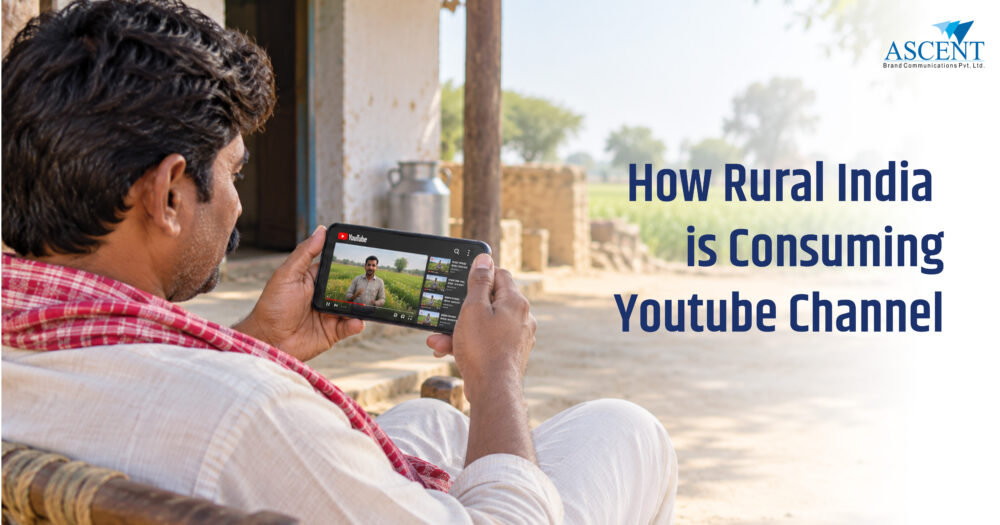
A few years ago, most conversations about India’s internet users focused on the metros. Today, the story is being written in villages and small towns. A young farmer in Madhya Pradesh learns drip irrigation from a Hindi YouTube tutorial. A homemaker in Bihar watches recipe Shorts in Bhojpuri. A dairy farmer in Gujarat compares cattle feed brands through videos made by other farmers.
YouTube has become one of the most important sources of learning, entertainment and product information for rural India. For brands, understanding how rural audiences use the platform is now essential to reaching the next several hundred million consumers.
This article looks at how rural India consumes YouTube today, what content it prefers, who these viewers are and how brands can use the platform to connect with them.
Rural India Is Now at the Centre of India’s Internet Growth
Rural India is no longer catching up online. It is leading. According to the Internet in India Report 2025 by IAMAI and Kantar, India now has 958 million active internet users, and rural India accounts for 57 per cent of them, or about 548 million people.
Video is a big part of this growth. The same report found that 588 million Indians, or 61 per cent of internet users, watched short-video content in 2025, and rural viewers slightly outnumbered urban ones.
YouTube sits at the heart of this shift. At its Brandcast 2025 event, YouTube reported that Shorts has more than 650 million monthly logged-in viewers in India and that its audience on connected TVs has crossed 75 million adults. The creator ecosystem has grown just as quickly: over 100 million Indian channels uploaded content in the past year, and more than 15,000 of them have crossed one million subscribers.
What Rural India Watches on YouTube
Rural viewers use YouTube for far more than entertainment. For many, it has become a practical learning tool, a news source and a way to research purchases.
Farming and Agricultural Knowledge
Agriculture content is one of the most valuable categories for rural viewers. Farmers watch videos on crop varieties, sowing methods, pest and disease control, organic farming, irrigation, dairy management, poultry, fisheries and farm machinery. Many prefer learning from fellow farmers who explain techniques in their own language and show results from their own fields.
Institutions also use the platform to share knowledge. NABARD, for example, publishes videos documenting rural development models and initiatives on its YouTube channel, making them accessible to communities, institutions and the public.
How-To and Skill-Building Videos
Rural viewers use YouTube to learn practical skills, such as tailoring, mobile repair, small business ideas, cooking, home construction and vehicle maintenance. For young people in villages and small towns, it has become a gateway to new livelihoods.
Education and Exam Preparation
Students in smaller towns rely heavily on YouTube for school lessons, competitive exam preparation and spoken English. Free, high-quality teaching in Hindi and regional languages has helped bridge gaps in access to coaching.
Entertainment, Music and Devotional Content
Regional music, comedy sketches, short films, web series, devotional songs and religious discourses attract very large rural audiences. Family viewing of this content on television screens is also increasing.
Village Life and Food Content
Videos showing traditional cooking, village routines and rural lifestyles have become hugely popular, not only among rural viewers but also among urban and overseas audiences.
Government Schemes and Local Information
Many viewers use YouTube to understand government schemes, subsidy processes, weather updates, mandi prices and local news, often explained by trusted local creators.
Product Research Before Purchase
Rural consumers increasingly watch reviews and demonstrations before buying smartphones, two-wheelers, tractors, agricultural inputs and household products. YouTube’s own research highlights this behaviour: a Kantar survey found that 89 per cent of viewers in India agree that creator content on YouTube helps them research and discover products while shopping.
How Rural India Watches YouTube
Understanding viewing habits is as important as understanding content preferences.
Mobile first. Most rural viewers access YouTube on smartphones, often on affordable devices and mobile data plans.
Short and long together. Shorts drive discovery and daily habit, while longer videos are used for detailed learning, such as farming techniques or product comparisons.
Regional languages. Viewers prefer content in Hindi, Marathi, Bhojpuri, Telugu, Tamil, Kannada, Bengali, Punjabi and other local languages. Content that feels local builds trust faster.
Shared and family viewing. One phone may be used by several family members. With more homes owning smart TVs, family co-viewing on bigger screens is also growing.
Voice search. Many first-time users search by speaking rather than typing, often in their own language. This makes natural, spoken-language titles and descriptions important for discovery.
Evening and seasonal peaks. Viewing often peaks after work hours, and interest in farming topics rises around sowing and harvest seasons.
The Rise of Rural and Small-Town Creators
One of the biggest changes on YouTube in India is who is creating content. Creators from villages and small towns now build large, loyal audiences by showing their daily lives, sharing farming knowledge, cooking traditional food or making comedy in local dialects.
KL Bro Biju, a family vlogger from Kannur in Kerala, is a well-known example. His short family videos have made him one of the most subscribed individual YouTubers in Asia, showing how relatable, everyday content from outside the metros can reach enormous audiences.
For brands, these creators matter because their audiences trust them. A recommendation from a farmer-creator who uses a product in his own field often carries more weight than a polished advertisement.
Understanding Different Types of Rural YouTube Viewers
Rural viewers are not a single group. Brands will find it useful to think about several broad segments, each with different habits and needs.
Established users are typically working men and small business owners who have used the internet for several years. They watch YouTube daily for news, information, entertainment and product research.
Aspiring youth are students and young job seekers, often planning to move to nearby cities for work or study. They are heavy users of Shorts, education content and entertainment.
Farmer learners are farmers of different ages who use YouTube mainly to learn about crops, inputs, machinery and market prices. They value demonstrations and advice from peers and experts.
New women users include homemakers and young women who have recently come online. They often start with cooking, devotional, health and family content and are growing rapidly as an audience.
Late adopters are older viewers who are gradually coming online, frequently through family members’ phones or smart TVs, and prefer familiar content such as devotional programmes and regional entertainment.
Brands can use these segments to decide which formats, languages and creators to use for each audience.
Why YouTube Matters for Brands Targeting Rural India
YouTube combines several strengths that are hard to find together in rural marketing:
- Scale: it reaches hundreds of millions of viewers, a large share of them outside the metros.
- Language flexibility: content can be created and targeted in almost any Indian language.
- Demonstration power: video shows how a product works, which builds confidence before purchase.
- Trusted voices: creators and fellow users provide social proof that rural buyers value.
- Targeting and measurement: campaigns can be targeted by geography, language and interest, and results can be tracked.
How Brands Can Use YouTube to Reach Rural India
1. Create Content in the Viewer’s Language
Build content in the local language from the start, rather than translating urban campaigns. Use local expressions, familiar settings and relatable people on screen.
2. Show, Do Not Just Tell
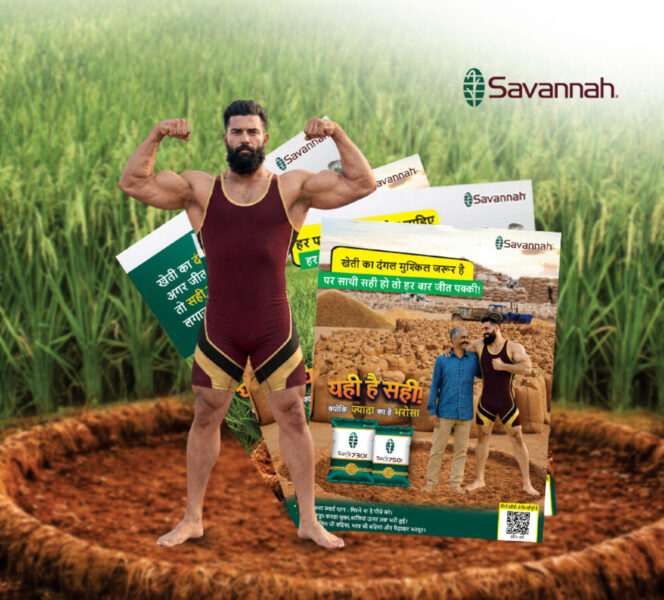
Rural buyers want proof. Field demonstrations, before-and-after comparisons, farm trials and customer testimonials perform far better than claims. Ascent’s work on hybrid seed launches, such as the “Khet Se Bazaar Tak” product communication campaign and Syngenta Paahi (HPH 2050), shows how product proof can be built into rural communication.
3. Partner With Trusted Creators
Work with farmer-creators, agricultural experts, veterinarians and regional creators whose audiences match your target market. Choose partners who genuinely use the product and let them explain it in their own words. Ascent’s rural influencer marketing and influencer marketing services support this.
4. Combine Shorts With Long-Form Content
Use Shorts to build awareness and reach new viewers quickly, and longer videos to explain products in detail. A short clip showing a crop result can lead viewers to a full video explaining the method and the inputs used.
5. Optimise for Search in Local Languages
Write titles, descriptions and tags using the words people actually say when searching, including regional-language and voice-search phrases. Add captions, chapters and clear thumbnails to improve discovery.
6. Target by Geography, Language and Season
Use YouTube’s targeting to reach specific districts, languages and interests. Time campaigns to match sowing, harvest, festival and wedding seasons, when purchase intent is highest.
7. Give Viewers a Clear Next Step
End every video with a simple action, such as calling a helpline, sending a WhatsApp message, finding the nearest dealer or visiting a demonstration. Ascent’s WhatsApp marketing and rural call centre services help convert this interest into leads.
8. Connect YouTube With On-Ground Activity
Record farmer meets, field days and rural van campaigns and turn them into video content. Use QR codes at haats and mandis to direct people to product videos. This extends the reach of every activation well beyond the people who attended.
9. Measure Beyond Views
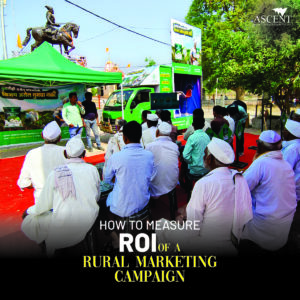
Track watch time, completion rates, engagement, leads, dealer enquiries and sales by district, not just views. Ascent’s guide on measuring the ROI of a rural marketing campaign explains how to link digital activity to business outcomes.
Ascent’s Experience in Rural Video Communication
Ascent has worked with agri-input, agritech, animal feed and rural financial brands to reach rural audiences through video and digital channels. For agritech company Plantix, Ascent created a bilingual explainer video introducing the “Mobile Kheti” app and its benefits for farmers. Ascent has also delivered social media marketing for Godrej Agrovet’s cattle feed brand, combining regional content with a clear understanding of how dairy farmers make decisions.
For more on this topic, see Ascent’s articles on the power of video content for brands and social media strategies for rural market penetration.
Frequently Asked Questions
How popular is YouTube in rural India?
Very popular. Rural India now accounts for the majority of the country’s active internet users, and short-video viewing among rural users has overtaken urban users. YouTube is one of the most widely used platforms among these audiences.
What type of YouTube content do rural viewers watch most?
Rural viewers watch farming and agricultural content, how-to and skill-building videos, education, regional entertainment, devotional content, village life and food videos, news and product reviews.
Why is regional language important for YouTube content in rural India?
Most rural viewers are more comfortable in their own language. Regional-language content feels familiar, is easier to understand and builds trust much faster than English or generic translated content.
How can brands use YouTube to reach farmers?
Brands can create regional-language demonstration videos, partner with farmer-creators and agricultural experts, target content by district and season, and link videos to helplines, WhatsApp or dealer networks to capture leads.
Are YouTube Shorts effective for rural marketing?
Yes. Shorts are widely watched in rural India and are effective for building awareness quickly. They work best when combined with longer videos that explain products in detail.
Conclusion
Rural India has become one of the most important audiences on YouTube. Rural viewers use the platform to learn, to be entertained and to decide what to buy, and they increasingly trust creators who speak their language and share their reality.
For brands, this is a major opportunity. Success depends on creating local, useful and credible video content, partnering with the right creators and connecting online interest to real-world action through dealers, helplines and on-ground activity.
Ascent combines more than 25 years of rural marketing experience with video marketing, content marketing and strategic rural marketing expertise to help brands reach rural audiences through YouTube and beyond.