
Drive out from any district town in India and you will pass through a particular kind of place. The fields are still there, and most families still have ties to farming. But there is also a busy market street, a two-wheeler showroom, a mobile phone shop, a bank branch, a coaching centre and a pharmacy. Young people wear the same brands as their city cousins, pay through UPI and watch the same YouTube creators.
These places are neither fully rural nor fully urban. They are Rurban, and for marketers they are some of the most important and least understood markets in the country.
This article explains what Rurban areas are, where the term comes from, why they matter to brands and how marketers use them to expand reach and growth across rural India.
What Are Rurban Areas?
The word “Rurban” combines rural and urban. It describes areas that keep the essential features of rural life, such as agriculture, village communities and open land, while taking on the economic activity, infrastructure and lifestyles typically associated with towns.
Rurban areas usually share a few characteristics:
- Growing population density, often around a large village, block headquarters or small town.
- Rising non-farm employment, including trade, services, small manufacturing, transport and construction.
- Better infrastructure, such as paved roads, electricity, mobile connectivity, banks, schools and health facilities.
- Active local markets, including permanent shops, weekly haats and agricultural mandis.
- Urban aspirations, visible in demand for branded products, education, smartphones, vehicles and better housing.
In simple terms, Rurban areas sit on the path between village and town. They are where rural India’s growth becomes most visible.
Where the Term Comes From: The Shyama Prasad Mukherji Rurban Mission
The term gained wide use in India through a government programme. The Union Cabinet approved the Shyama Prasad Mukherji Rurban Mission (SPMRM) in September 2015, and the Prime Minister launched it from Kurubhat in Chhattisgarh’s Rajnandgaon district on 21 February 2016. Its forerunner was the Provision of Urban Amenities to Rural Areas (PURA) scheme announced in 2003.
The mission, run by the Ministry of Rural Development, selects rural areas that show growing signs of urbanisation, such as rising population density, high non-farm employment and increasing economic activity. It aims to boost local economic development, improve basic services and create well-planned Rurban clusters.
Under the mission, a Rurban cluster is a group of neighbouring villages with a combined population of about 25,000 to 50,000 in plain and coastal areas, and 5,000 to 15,000 in desert, hilly or tribal areas.
The programme targeted 300 clusters across India. As of February 2023, 298 clusters had been approved, and 39,554 of the 75,999 planned works had been completed, with another 13,932 in progress. The Aibawk cluster in Mizoram’s Aizawl district became the first to complete all of its planned projects, including agri-link roads and inter-village road connections that improved market access.
For marketers, the specific government programme matters less than what it represents: a recognised, growing layer of India that combines rural roots with urban-style demand.
| Feature | Rural | Rurban | Urban |
| Main livelihood | Agriculture and allied activities | Mix of farming, trade, services and small industry | Services, industry and trade |
| Infrastructure | Basic and uneven | Improving roads, power, banking and connectivity | Well developed |
| Retail | Small general stores, weekly haats | Permanent markets, showrooms, haats and mandis | Organised retail, malls and e-commerce |
| Brand exposure | Limited, often driven by local retailers | Growing, influenced by TV, digital and nearby towns | High |
| Role for marketers | End consumers, often reached through hubs | Distribution hubs and fast-growing consumer markets | Mature, competitive markets |
Power Villages: The Hubs of Rural Distribution
A key idea within Rurban marketing is the power village, also called a feeder village or hub village. These are larger, well-connected villages or small towns that supply goods and services to the smaller villages around them.
Villagers from surrounding areas travel to power villages to shop, sell produce at the mandi, visit the bank, see a doctor, attend school or buy agricultural inputs. Local retailers in smaller villages also restock from wholesalers in these hubs.
This makes power villages the natural centre of a hub-and-spoke model. A brand that is well stocked, visible and trusted in a power village can reach dozens of surrounding villages without building a separate presence in each one. For many categories, winning the hub is the most efficient way to win the cluster.
Why Rurban Markets Matter to Marketers Now
Rural India Is Large and Changing Fast
According to the 2011 Census, India’s rural population stood at 833 million, almost 68 per cent of the country. Between 2001 and 2011, the rural population grew by 12 per cent, and the number of villages increased by 2,279. While a new Census will update these figures, the direction is clear: rural India remains the majority of the country, and a growing share of it is taking on Rurban characteristics.
Rural India Is Now Digitally Connected
Digital access has transformed what Rurban consumers know and expect. According to the Internet in India Report 2025 by IAMAI and Kantar, rural India accounts for 57 per cent of India’s active internet users, around 548 million people, and is growing at almost four times the pace of urban India.
This is a major shift from 2020, when this article was first written. At that time, rural India had 299 million internet users, just 31 per cent of the rural population. Rurban consumers now research products online, watch reviews and compare prices before they visit a store.
Aspirations Are Rising
Better roads, education, mobile connectivity and exposure to media have raised expectations. Rurban consumers increasingly want branded, better-quality products, from packaged foods and personal care to two-wheelers, smartphones, appliances and home improvement materials. Many are willing to upgrade when a brand offers clear value and trustworthy service.
Urban Markets Are Crowded
In most categories, metro and large-city markets are highly competitive and expensive to win. Rurban markets offer room for growth, lower media costs and, often, stronger loyalty once trust is established.
How Marketers Use Rurban Areas
1. Map and Prioritise Clusters
Not every Rurban area offers the same opportunity. Marketers begin by identifying clusters with the right mix of population, income, connectivity, retail density and category demand. Data on sales, retail outlets, mandi activity, road access and digital usage helps decide where to focus first. Ascent’s rural market research and strategic rural planning services support this stage.
2. Build Distribution Through Hub Towns
Brands appoint distributors and stockists in power villages and small towns, then use them to serve surrounding retailers through regular van routes or retailer visits. This hub-and-spoke approach reduces logistics costs while extending reach deep into rural areas. See Ascent’s rural distribution planning service.
3. Win Visibility in Hub Markets
The main market in a Rurban town influences buying across the entire cluster. In-store branding, displays, signage, wall paintings and retailer programmes in these markets help brands stand out where purchase decisions are made. Ascent’s rural retail visibility and rural brand visibility services focus on this.
4. Activate Where People Gather
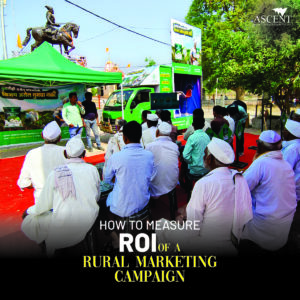
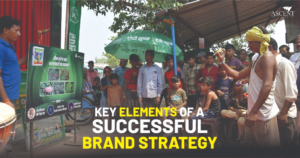
Weekly haats, mandis, fairs and religious gatherings in Rurban hubs draw people from many villages at once. These are ideal locations for product demonstrations, sampling, contests and lead generation. Ascent’s article on mandis as a touch point to reach farmers and its rural congregation planning service cover this approach.
5. Extend Reach Into Surrounding Villages
From the hub, brands use rural van campaigns, farmer meets and village-level activations to reach consumers in smaller spoke villages. This builds demand that retailers in the hub then fulfil.
6. Use Rurban Clusters as Launch Pads
Rurban clusters make practical test markets for new products, pack sizes, pricing and messages. Results from a few carefully chosen clusters help brands refine their approach before scaling across a state or region. Ascent’s go-to-market strategy and new product launch services support this process.
7. Combine On-Ground and Digital Targeting
Because Rurban consumers are now digitally active, brands can target them by district or pin code with regional-language video, social media and WhatsApp communication, then direct interest to local dealers. Ascent’s article on social media strategies for rural market penetration explores this in detail.
8. Work With Local Influencers
Retailers, progressive farmers, sarpanches, teachers, SHG leaders and local mechanics shape opinions across a cluster. Engaging them builds trust faster than advertising alone. See Ascent’s rural influencer marketing service.
9. Make Purchases Easier
For higher-value products such as two-wheelers, appliances, tractors and building materials, partnerships with banks, NBFCs and microfinance institutions make purchases more affordable. Ascent’s article on financial services for rural markets covers this opportunity.
Categories With Strong Potential in Rurban Markets
- FMCG: premium and branded packaged foods, personal care and home care products.
- Consumer durables and electronics: televisions, refrigerators, coolers, fans and smartphones.
- Automobiles: two-wheelers, small cars, tractors and light commercial vehicles.
- Agri inputs and machinery: seeds, crop protection, fertilisers, irrigation equipment and farm tools.
- Building materials: cement, roofing, steel, paints, pipes and fittings.
- Financial services: savings, loans, insurance and digital payments.
- Healthcare and education: clinics, diagnostics, pharmacies, coaching and skill training.
Challenges to Plan For
Rurban markets offer strong potential, but they also need careful planning. Demand can vary with harvests and seasons. Language and culture change from one district to the next. Credit is often essential for larger purchases. Retailers have limited shelf space and many competing brands. Trust takes time to build, and a single poor service experience can spread quickly across a cluster.
Brands that succeed treat Rurban markets as distinct, not as smaller versions of urban markets or larger versions of villages.
An Illustrative Scenario: Entering a Rurban Cluster
Consider a consumer durables brand planning to grow sales of air coolers across central Madhya Pradesh. Instead of spreading its budget thinly across the state, it identifies 15 Rurban clusters, each centred on a block headquarters town with a busy weekly haat.
In each hub town, the brand appoints a dealer, invests in store branding and runs demonstrations on haat days. A van campaign then visits the surrounding villages, showing the product in use and directing interested buyers to the hub dealer. Regional-language videos on YouTube and WhatsApp, targeted by pin code, support the campaign. A finance partner offers easy EMIs at the dealer counter.
The brand tracks footfall, enquiries and sales in each cluster and uses the results to decide which clusters to expand into the following summer.
How Ascent Helps Brands Win Rurban Markets
With more than 25 years of rural marketing experience and a pan-India network, Ascent helps brands identify the right Rurban clusters, build distribution and visibility, and create demand through on-ground and digital engagement. Our work spans agri inputs, building materials, consumer durables, FMCG, automobiles and financial services, including campaigns such as UltraTech Cement’s “Baat Ghar Ki: On Wheels” and Syngenta Paahi (HPH 2050).
For more on this topic, see Ascent’s articles on small-town and rural markets for regional brands and India moving to Bharat.
Frequently Asked Questions
What does Rurban mean?
Rurban combines the words rural and urban. It describes areas that keep rural features, such as agriculture and village communities, while developing urban-style infrastructure, economic activity and lifestyles.
What is a Rurban cluster?
Under the Shyama Prasad Mukherji Rurban Mission, a Rurban cluster is a group of neighbouring villages with a combined population of about 25,000 to 50,000 in plain and coastal areas, or 5,000 to 15,000 in desert, hilly or tribal areas, that shows signs of growth and urbanisation.
What is a power village or feeder village?
A power village is a larger, well-connected village or small town that supplies goods and services to surrounding smaller villages. It acts as a hub for trade, retail, banking and services within a cluster.
Why are Rurban areas important for marketers?
Rurban areas combine a large population, rising incomes, growing digital access and urban-style aspirations. They also serve as distribution hubs for surrounding villages, making them efficient entry points into wider rural markets.
How can brands reach Rurban consumers?
Brands can map and prioritise clusters, build distribution through hub towns, invest in retail visibility, run activations at haats and mandis, extend reach with van campaigns, use regional-language digital targeting and partner with local influencers and finance providers.
Conclusion
Rurban areas are where rural India’s growth is most visible. They combine the scale and roots of rural India with the infrastructure, connectivity and aspirations of urban India. For marketers, they offer both a fast-growing consumer base and an efficient gateway to thousands of surrounding villages.
Brands that map these clusters carefully, build strong presence in hub towns and combine on-ground engagement with digital reach are well placed to lead the next phase of growth in Bharat.
Ascent can help you identify the right Rurban clusters and build a practical plan to win them through our integrated rural marketing services.