For years, reaching rural India meant wall paintings, van campaigns, haat activations and the local dealer’s recommendation. These still matter. What has changed is that the same farmer, shopkeeper or homemaker now also spends time every day on WhatsApp, YouTube and short-video apps, often on a smartphone shared with the family.
This shift has made social media one of the most cost-effective ways to build awareness, trust and demand in rural markets. It has also made it easy to get wrong. A campaign designed for metro audiences, run in English and measured only by likes, rarely moves sales in a village.
This article covers how rural audiences use social media today, which platforms matter, and the strategies that help brands turn online attention into real market penetration.
Why Social Media Now Matters for Rural Market Penetration
Rural India is no longer on the edge of the internet. It is at the centre of its growth. The Internet in India Report 2025 by IAMAI and Kantar puts India’s active internet users at 958 million, with rural India accounting for 57 per cent, or about 548 million users. Rural users are also being added at nearly four times the pace of urban India.
The way these users consume content matters just as much. According to the same report, 588 million users, or 61 per cent of India’s internet population, watched short-video content in 2025, and rural viewers slightly outnumbered urban ones. The report also found that about 44 per cent of users engaged with AI-enabled features such as voice search and chatbots.
For brands, this means rural consumers can now be reached directly, repeatedly and at a fraction of the cost of traditional mass media. The challenge lies in speaking to them in a way they recognise and trust.
Understanding the Rural Social Media User
Rural social media users differ from urban users in several practical ways, and strategy should start from these differences.
Video and voice come before text. Many first-time users are more comfortable watching and listening than reading, especially in English. Short videos, voice notes and visual demonstrations work far better than long captions.
Language is local. A Marathi-speaking farmer in Vidarbha and a Bhojpuri-speaking worker in eastern Uttar Pradesh respond to content in their own language and idiom, not to a generic Hindi translation.
Phones are often shared. One device may be used by several family members, which affects who sees an ad and when.
Data and time are valuable. Users are conscious of data costs and often browse in the evening or during off-peak hours. Heavy content that loads slowly is skipped.
Trust flows through people. Recommendations from a relative, a respected farmer, the local dealer or a village WhatsApp group carry more weight than brand messaging alone.
Seasons shape needs. Sowing, harvest, festivals and wedding seasons drive demand for different products at different times of the year.
Choosing the Right Platforms
Not every platform deserves equal attention. The right mix depends on the product, region and audience, but a few platforms consistently matter in rural markets.
WhatsApp is the backbone of rural digital communication. Family groups, village groups, farmer groups and dealer networks all run on it, which makes it ideal for relationship building, product updates and customer support.
YouTube is where rural audiences go to learn. Farming techniques, product reviews, recipes and repair tutorials in regional languages draw large and loyal audiences.
Facebook remains widely used by rural men and small business owners, particularly in groups organised around crops, trades or local communities.
Instagram Reels and regional short-video apps such as ShareChat, Moj and Josh are popular with younger rural audiences and work well for entertaining, fast-moving brand content.
Social Media Strategies That Work in Rural Markets
1. Lead With Regional-Language Content
Regional language is the single most important factor in rural social media performance. Content should be created in the local language from the start, not translated at the end. This includes scripts, on-screen text, voice-overs, captions, comment replies and even the landing page a user reaches after clicking.
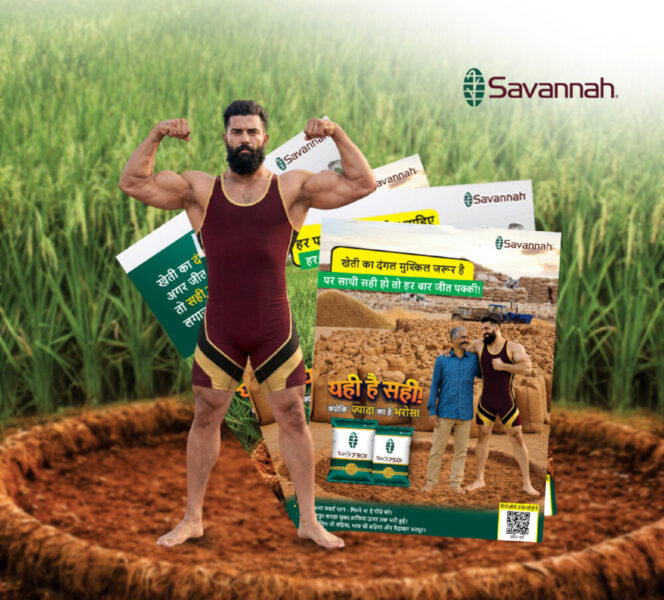
Local idioms, humour and cultural references make content feel familiar. Ascent’s Savannah “यही है सही!” digital communication campaign is one example of building a campaign around a simple, vernacular message.
2. Build Content Around Demonstration and Proof
Rural buyers want to see a product work before they spend money on it. Short videos showing a seed variety in the field, a pump running on low voltage or a roofing sheet surviving heavy rain are far more persuasive than claims.
The most effective formats include field demonstrations, before-and-after comparisons, customer testimonials, simple how-to guides and question-and-answer sessions with experts. Real farmers, shopkeepers and users should appear on screen wherever possible. Ascent’s video marketing and content marketing services focus on this kind of practical storytelling.
3. Work With Local Voices and Micro-Influencers
In rural markets, influence is local. A progressive farmer with 20,000 YouTube subscribers in one district may deliver more trust and more sales than a national celebrity. Agricultural experts, veterinarians, input dealers, SHG leaders and popular regional creators can all act as credible voices.
The key is authenticity. Influencers should actually use the product and speak about it in their own words. Ascent’s rural influencer marketing and influencer marketing services help brands identify and manage these partnerships.
4. Use WhatsApp as a Relationship Channel
WhatsApp works best when it feels personal and useful, not promotional. Brands can use it to share seasonal advisories, answer product questions, send offers, confirm orders and connect customers to their nearest dealer. Click-to-WhatsApp ads on Facebook and Instagram are an effective way to start these conversations.
Dealer and retailer groups are just as important. Keeping channel partners informed with ready-to-share content in the local language turns them into active promoters. Always collect consent and avoid excessive messaging, as users quickly block brands that spam them. See Ascent’s WhatsApp marketing service for more.
5. Connect Social Media With On-Ground Activation
The strongest rural campaigns do not treat online and offline as separate. Social media amplifies on-ground activity, and on-ground activity feeds social media.
A farmer meet can be recorded and turned into short videos for the whole district. A rural van campaign can announce its route on local WhatsApp groups a day in advance. QR codes at haats and mandis can lead visitors to a WhatsApp chat or a product video. This approach, explored further in Ascent’s article on mandis as a touch point to reach farmers, helps brands capture leads that would otherwise be lost after the event.
6. Target by Geography and Season
Social media platforms allow targeting down to district and pin code level. Rural brands should use this to match content to local crops, languages, weather and buying cycles.
A seed company, for example, can run cotton-focused content in parts of Maharashtra and Gujarat while promoting soybean in Madhya Pradesh, each timed to the local sowing window. This improves relevance and reduces wasted spend.
7. Make It Easy to Buy or Enquire
Awareness only matters if it leads to action. Every campaign should give rural users a simple next step, such as calling a helpline, sending a WhatsApp message, locating the nearest dealer or ordering online.
Payment options should reflect local habits. UPI is now common, but cash on delivery and dealer-assisted purchases still matter for many categories. For higher-value products, the social media journey often ends at a physical store, so dealer locators and lead sharing with channel partners are essential.
8. Design for Low Bandwidth and Voice Search
Content and landing pages should load quickly on basic smartphones and slower networks. Short videos, compressed images and lightweight pages perform better. With many users now relying on voice search, brands should also make sure their product pages, YouTube titles and descriptions use the natural, spoken phrases people actually say in their own language.
9. Respond Quickly in the Customer’s Language
Comments and messages on social media are often a rural customer’s first direct contact with a brand. Slow or English-only replies damage trust. Brands should set up regional-language response teams, backed by a rural call centre for complex queries and complaints.
10. Measure What Actually Drives Sales
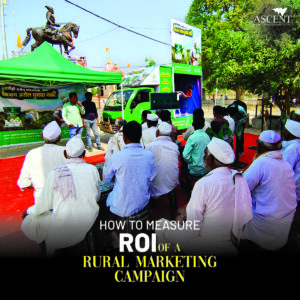
Likes and views are useful signals, but they are not the goal. Rural social media campaigns should track leads generated, WhatsApp conversations started, dealer footfall, coupon redemptions and sales by district. Ascent’s guide on measuring the ROI of a rural marketing campaign explains how to link these metrics to business outcomes.
Common Mistakes to Avoid
Several mistakes repeatedly weaken rural social media campaigns. Running urban creative with a translated caption rarely works. Relying on a single platform leaves large audiences unreached. Using polished studio content with no real users often feels distant and unconvincing. Treating social media as a standalone channel, without dealer involvement or on-ground support, limits conversions. Finally, ignoring comments and messages turns potential customers into critics.
An Illustrative Scenario: Launching a Cattle Feed Brand in Rural Districts
Consider a cattle feed brand entering five districts in Rajasthan and Madhya Pradesh. Most dairy farmers in these areas buy feed from local shops and rely on advice from neighbours and veterinarians.
A structured social media plan would begin with rural market research to understand feeding habits and concerns. The brand would then produce short Hindi and Rajasthani videos showing real farmers comparing milk yield before and after switching feed, supported by a local veterinarian explaining the nutrition in simple terms. These videos would run as geo-targeted ads on YouTube, Facebook and Instagram, with click-to-WhatsApp buttons connecting farmers to a helpline.
At the same time, village-level dairy meetings would be recorded and shared on local WhatsApp groups, and retailers would receive content they could forward to their customers. Leads would be passed to the nearest dealer, and sales would be tracked by district. Ascent has delivered similar work, including social media marketing for the cattle feed brand of Godrej Agrovet.
Frequently Asked Questions
Is social media effective for reaching rural consumers in India?
Yes. Rural India now accounts for the majority of the country’s active internet users, and rural audiences actively use WhatsApp, YouTube, Facebook and short-video apps. Social media works best when combined with regional-language content and on-ground activity.
Which social media platforms are best for rural marketing?
WhatsApp and YouTube are usually the most important, followed by Facebook, Instagram Reels and regional short-video apps such as ShareChat and Moj. The right mix depends on the product, region and target audience.
Why is regional language important in rural social media marketing?
Most rural users are more comfortable consuming content in their own language. Regional-language content feels familiar, builds trust and delivers much higher engagement than English or generic translated content.
How can brands measure the success of rural social media campaigns?
Brands should look beyond likes and views and track leads, WhatsApp enquiries, dealer footfall, coupon redemptions and district-level sales to understand real business impact.
Can social media replace traditional rural marketing?
No. Social media works best alongside traditional rural marketing such as farmer meets, van campaigns, haat activations and dealer engagement. Each strengthens the other.
Conclusion
Social media has opened a direct, affordable and measurable route into rural India. Brands that succeed treat it as part of a wider rural strategy: they speak the local language, show real proof, work with trusted local voices, connect online conversations to dealers and on-ground activity, and measure results in sales rather than likes.
With more than 25 years of experience across rural and digital marketing, Ascent helps brands build integrated rural marketing programmes that combine social media marketing with strong on-ground execution.