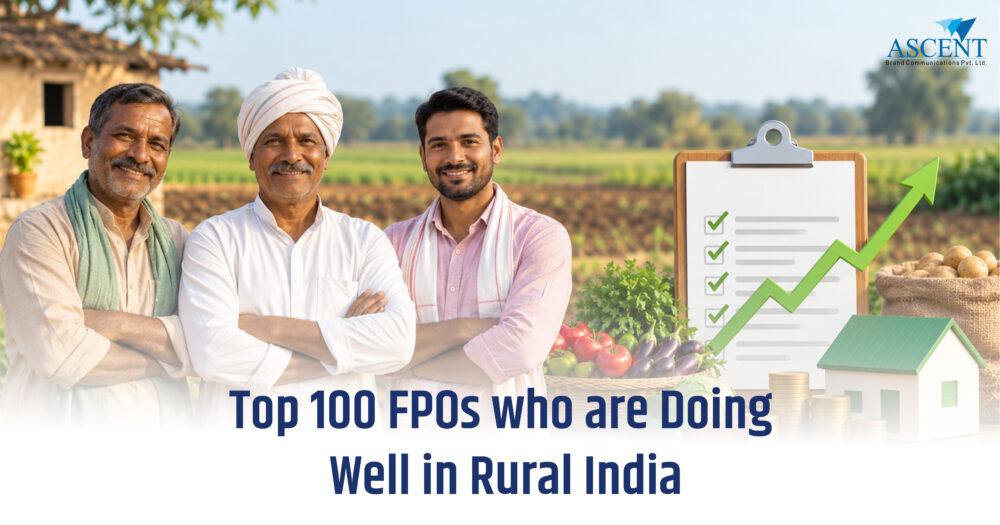
Most Indian farmers work small plots of land. On their own, they buy seeds and fertiliser at retail prices, sell their crops to whoever arrives at the farm gate and have little say over the price they receive. Together, they can do much better.
Farmer Producer Organisations (FPOs) bring farmers together so they can buy inputs in bulk, share equipment and knowledge, add value to their produce and sell directly to processors, retailers, exporters and government procurement agencies. The best of them have raised incomes, cut costs and given small farmers a stronger voice in the market.
This article profiles FPOs across India that have made a real difference to their members, grouped by sector, along with lessons from FPOs that struggled and the latest data on government support for FPOs.
What Is a Farmer Producer Organisation?
An FPO is an organisation owned and controlled by farmers, set up to improve their economic position through collective action. FPOs are registered either as producer companies under the Companies Act or as cooperative societies under state cooperative laws. Only primary producers, such as farmers, milk producers and fishers, can be members, and each member usually has one vote regardless of shareholding.
FPOs help small farmers overcome the limits of small landholdings by using their collective strength to:
- Access credit, quality inputs, services and technology.
- Reduce transaction and transport costs.
- Reach high-value markets and negotiate better prices.
- Add value through grading, processing, packaging and branding.
- Enter fairer partnerships with private companies.
Because landholdings continue to shrink as land is divided between generations, FPOs are widely seen as one of the most practical ways to make small-scale farming viable.
FPOs in India Today: The 10,000 FPO Scheme
The government launched the Central Sector Scheme for the Formation and Promotion of 10,000 FPOs on 29 February 2020, with a budget of ₹6,865 crore up to 2027-28. The target was reached in February 2025, when the 10,000th FPO was registered in Khagaria district, Bihar, focusing on maize, banana and paddy.
About 30 lakh farmers are connected to FPOs formed under the scheme, around 40 per cent of them women. Each new FPO receives five years of handholding support, ₹18 lakh towards management costs over three years, a matching equity grant of up to ₹2,000 per farmer member (capped at ₹15 lakh per FPO) and a credit guarantee for project loans of up to ₹2 crore.
These FPOs reached a combined turnover of ₹5,035.5 crore as of 30 June 2025, and they are being linked to digital platforms such as e-NAM, ONDC and GeM to expand market access. By March 2026, 4,724 FPOs were registered on e-NAM.
FPO Success Stories at a Glance
| Sector | FPOs Featured |
| Dairy | Visakha Dairy, Sangam, Paayas, Maahi, Saahaj, Shreeja, Baani, Shree Chhatrapati Shahu, Sagar Shri Mahila Dugdh Utpadak |
| Fruits, vegetables and horticulture | Sahyadri, Abhinav Farmers’ Club, Devnadi Valley, Bhangar, Jaipur Veg Agro, Rameshwar, Kashi Vishwanath |
| Organic and plantation crops | Chetna Organic, Indian Organic Farmers, VANILCO, Baliraja Krishak |
| Cotton | Nimad Farmers, Khargone PIM, Maha Gujarat Agri Cotton |
| Seeds and farm inputs | Sironj Crop, Samarth Kisan, Sagar Samridhi, Khajuraho, Nowgong, Ramraja, Prayagraj, Nachalur, Jai Hanuman Samruddhi |
| Pulses and MSP procurement | Jalore Agro, Marwar Agro, Aman Kisan Samruddhi, Kedarnath Kisan Agro |
| Grains and mixed farming | Shri Kuraon, Jhambukhand, Vijwa, Dungaria, Udaipur Agro, Dhari Krishak Vikas |
| Poultry | Madhya Pradesh Women Poultry Producers Company |
| Coconut | Vadakara Coconut, Palakkad Coconut |
Dairy FPOs and Milk Producer Companies
1. Sri Vijaya Visakha Milk Producers Company Limited (Visakha Dairy), Andhra Pradesh
Visakha Dairy began as a cooperative in 1973, started operations in 1977 with a 50,000 litre-per-day plant in Visakhapatnam and converted to a producer company in January 2006 while keeping cooperative principles in its governance. Its ISO-certified plants in Visakhapatnam and Rangampeta can handle up to 9 lakh litres a day, producing milk, curd, ghee, paneer, sweets, flavoured milk and more for markets in Andhra Pradesh, Telangana, Odisha and Chhattisgarh. It supports farmers with a training centre, veterinary health centres and mobile veterinary vans.
2. Sangam Milk Producer Company Limited, Guntur, Andhra Pradesh
Sangam Dairy grew from a feeder balancing dairy set up by the NDDB in 1977 under Operation Flood. Milk producers in Krishna, Guntur and West Godavari districts contributed one day’s milk value to buy land for the dairy plant. The union became a mutually aided cooperative in 1997, repaying the state government’s ₹81 lakh share capital with NDDB support, and was incorporated as Sangam Milk Producer Company Limited in June 2013.
3. Paayas Milk Producer Company Limited, Rajasthan
Founded in May 2012, Paayas enrolled almost 90,000 milk producers across Rajasthan. It operates in eight districts and collects more than 5 lakh litres of milk a day from around 3,000 villages, giving members an organised, producer-owned alternative for selling their milk.
4. Maahi Milk Producer Company Limited, Gujarat
Maahi was set up in June 2012 and began commercial operations in March 2013 across Saurashtra and Kutch, starting with 85,194 members. It has since grown to more than 2,350 milk pooling points across 11 districts. Each member has a unique 16-digit code, and milk quantity, fat and SNF are recorded online, which keeps collection and payments transparent.
5. Saahaj Milk Producer Company Limited
Saahaj members join by paying a small registration fee and a one-time share contribution, and must supply a minimum quantity of milk to keep their membership active. The company runs producer awareness, clean milk production and women’s awareness programmes, teaching members about milk quality, hygienic milking and the importance of not adding water to milk.
6. Shreeja Mahila Milk Producer Company Limited, Tirupati, Andhra Pradesh
Shreeja, which began operations in September 2014, describes itself as the world’s largest milk producer company owned entirely by women. It serves more than 74,000 members across 1,300 villages in Andhra Pradesh and neighbouring areas of Karnataka and Tamil Nadu through over 3,000 milk pooling points. It also supplies cattle feed and runs NDDB-supported programmes such as ration balancing to improve animal productivity.
7. Baani Milk Producer Company Limited, Patiala, Punjab
Established in August 2014, Baani operates across eight districts in Punjab and supports the livelihoods of over 55,000 dairy farmers. It focuses on animal nutrition and breeding support, training farmers in efficient and ethical milk production and encouraging the participation of women and marginal farmers.
8. Shree Chhatrapati Shahu Milk and Agro Producer Company, Kagal, Maharashtra
This company was set up to give farmers and their families a reliable market for milk and other produce. It has supplied milk and milk products across Maharashtra since September 2008, upgraded its plant in 2010, bought its own chilling equipment in 2011 and built a network of over 400 dealers, 300 distributors and 41 delivery vans, including a milk franchise model to reach new markets.
9. Sagar Shri Mahila Dugdh Utpadak Producer Company, Sagar, Madhya Pradesh
Working under the Madhya Pradesh District Poverty Initiatives Project (MP-DPIP) since 2001, the NGO SRIJAN helped landless and poor households in the Jaisinagar block take up dairy farming, one of the few livelihoods open to people of all castes in the area. Around 700 buffaloes were provided in the first phase, and SRIJAN then formed a women-only producer company to help members market their milk.
Fruit, Vegetable and Horticulture FPOs
10. Sahyadri Farmers Producer Company Limited, Nashik, Maharashtra
Founded in 2010 by Vilas Shinde, an agricultural engineering postgraduate from a farming family inspired by the Amul model, Sahyadri began with grape exports and has been India’s largest grape exporter since 2015. Its 90-acre integrated facility at Mohadi, Dindori, can handle 800 tonnes of fruit and vegetables a day for export, domestic sale and processing. It works with over 1,000 grape growers across 5,000 acres and, since 2014, with thousands more farmers growing other crops. It also uses software to give farmers technical advice, weather information and price updates on their mobile phones.
11. Abhinav Farmers’ Club, Pune, Maharashtra
Founded in 2004 by Dnyaneshwar Bodke with support from NABARD, Abhinav Farmers’ Club started with around 850 farmers in Mulshi taluka and grew to about 4,600 members across Maharashtra, Madhya Pradesh, Gujarat and Uttar Pradesh by 2012. Members grow exotic vegetables, flowers and organic produce in polyhouses and supply malls, hotels and retailers in Pune, Mumbai and Delhi. The club won a national award in 2008, and during the pandemic it used e-commerce to deliver produce directly to households.
12. Devnadi Valley Agriculture Producer Company, Sinnar, Nashik, Maharashtra
Promoted by the NGO Yuva Mitra and built on existing water user associations, Devnadi Valley brings together farmers from 10 villages in Sinnar taluka. It markets members’ onions, garlic and vegetables, having supplied 160 tonnes of onions to Tata’s Khet Se and weekly consignments to Star Bazaar. In 2012, NABARD provided ₹30 lakh in credit under its Producer Organisation Development Fund. The company plans village-level service centres for inputs and produce collection.
13. Bhangar Vegetable Producer Company, West Bengal
Supported by the state horticulture department and Access Development Services, Bhangar was founded in September 2012 with 1,750 small farmers organised into 117 farmer interest groups across 48 villages. With better practices and 92 polyhouses, some members raised production from 7,500 kg to over 9,500 kg and earnings from ₹22,000 to ₹85,000 in 140 days. The company grades and packs vegetables for buyers such as Mother Dairy and Metro Cash and Carry, sources fertiliser from IFFCO, uses KVKs for soil testing and received a ₹121.65 lakh state subsidy towards cold storage.
14. Jaipur Veg Agro Producer Company Limited, Rajasthan
Promoted by Access Development Services with support from SFAC under the National Horticulture Mission’s vegetable initiative, JVPCL supplies members with quality seeds and holds a direct dealership for fertiliser from Indian Potash Limited. Its farmers grow vegetables almost year-round. The company addresses a real problem: selling through local mandis cost farmers around 10 per cent of their produce through commissions, weight deductions and inaccurate manual weighing.
15. Rameshwar Farmer Producer Company Limited, Varanasi, Uttar Pradesh
Rameshwar opened its own wholesale counter at Rajatalab mandi in Varanasi. Wholesalers typically charged farmers a 6 per cent commission, while the FPO charges 5 per cent and returns 2 per cent to shareholder farmers as a monthly loyalty bonus. It uses electronic weighing scales and a shared vehicle to transport produce, cutting transport costs by 20 per cent. Around 200 shareholders and 50 non-members sell vegetables through the counter.
16. Kashi Vishwanath Farmer Producer Company Limited, Varanasi, Uttar Pradesh
This vegetable growers’ FPO in Rustompur village carried out a market survey and found demand for handmade potato papad ahead of Holi in 2017. It partnered with a 12-member women’s farmer interest group, arranged training through the Food Processing Department and marketed the papad under its own name. Papad was sold to shops at ₹150 per kg against a production cost of ₹108.50, and the FPO plans to scale up with more groups and add products such as pickles and ketchup.
Organic and Plantation Crop FPOs
17. Chetna Organic, Andhra Pradesh, Maharashtra and Odisha
Chetna Organic began in 2004 as a pilot to help smallholder cotton farmers adopt organic and non-pesticide farming and connect to fair-trade cotton markets. It now supports a network of over 25,000 farmers in Andhra Pradesh, Maharashtra and Odisha, federated into 13 district-level cooperatives that manage local capacity building, government linkages and community-owned infrastructure.
18. Indian Organic Farmers Producer Company Limited, Kochi, Kerala
Registered in September 2004, this is widely cited as India’s first producer company. Only certified organic farmers can join, and each member has one vote regardless of shares held. Membership grew from 10 to 1,356 in four years, and turnover rose from zero to ₹5.52 crore. The company partnered with buyers including Hindustan Unilever and Cadbury, processed cocoa beans to meet export standards and raised the price paid to farmers for cocoa from ₹70 to ₹96-100 per kg. It collects produce from members’ homes and pays them at the time of pickup.
19. Vanilla India Producer Company Limited (VANILCO), Kerala
VANILCO was promoted by the Indian Farmers Movement (INFAM), a Kerala-based association with over one lakh members, to protect the long-term interests of vanilla farmers. It buys, processes and markets members’ vanilla beans and extracts, using pooled procurement to strengthen farmers’ position in the market.
20. Baliraja Krishak Producer Company, Ahmednagar, Maharashtra
The NGO Lok Panchayat moved from watershed work to promoting organic farming after concluding that chemical inputs were raising costs and harming soil and health. It set up village farmer groups, a Participatory Guarantee System for organic certification and, in 2009, a producer company with 100 shareholders, which later grew to 220. The company runs a seed bank for traditional varieties and sells forest products such as honey, karonda squash and jamun juice, some made by a centre supporting single women.
Cotton FPOs
21. Nimad Farmers Producer Company, Barwani, Madhya Pradesh
Registered in February 2009 with 367 members, Nimad Farmers focuses on Better Cotton production under the Better Cotton Initiative. It has agreements with four ginners, who send experts to check quality and set prices, and it supplies inputs to members at lower than market prices. Farmers receive better prices than they did from local traders and save time and transport costs.
22. Khargone Participatory Irrigation Management Producer Company, Madhya Pradesh
This FPO grew out of an irrigation project run by the NGO ASA from 2003 to 2007. It produces Better Cotton and supplies inputs, working with the same ginners as Nimad Farmers and earning a commission of ₹15 per quintal. From 2011-12, it made a profit of ₹20 lakh from Better Cotton sales.
23. Maha Gujarat Agri Cotton Producer Company Limited, Amreli, Gujarat
Founded in 2008 by farmer leaders to help cotton growers reach wider markets, this company grew to over 8,800 farmer members with no government grants, funded entirely by its shareholders. In 2009, it opened its first Apna Kisan Mall selling seeds, fertilisers and crop protection products at 15 to 60 per cent below market prices, and more than 100 malls followed across Gujarat, most run by village groups under agreements with the company. It pooled 7.35 lakh kg of cotton in 2009-10, exported Kesar mangoes to the Middle East and supplied lower-grade mangoes for canning.
Seed and Farm Input FPOs
24. Sironj Crop Producer Company, Vidisha, Madhya Pradesh
In Sironj block, where most farmers depend on largely unirrigated land, the NGO PRADAN formed common interest groups of soybean farmers from 2001 under MP-DPIP. After seeing the benefits of working together, the groups registered Sironj Crop Producer Company, the first producer company registered in Madhya Pradesh. It has more than 3,200 users, including 1,910 shareholders from 84 villages across Sironj and Lateri blocks, and maintains a 70:30 ratio of below-poverty-line to other members.
25. Samarth Kisan Producer Company, Madhya Pradesh
One of the best-capitalised producer companies formed under MP-DPIP, Samarth Kisan produces wheat and soybean seed and supplies inputs. From 2008, it joined Solidaridad’s Soy Producer Support Initiative, which trained farmers to raise productivity while using fewer inputs. It produced 6,000 quintals of soybean seed in 2010-11.
26. Sagar Samridhi Producer Company, Sagar, Madhya Pradesh
Sagar Samridhi produces soybean and wheat seed through contracts with member farmers, paying them more than the market price. It bought its own seed processing equipment in 2007 and supplies inputs through MP-DPIP facilitation teams and cooperative societies, which distribute them to farmers in their villages.
27. Khajuraho Producer Company, Madhya Pradesh
Covering 99 villages, Khajuraho Producer Company is notable for having 140 common interest groups as shareholders. Its core business is seed production and input supply, and it runs a vegetable nursery on land provided by the state government. It trains members in new technologies and equipment, including seed drills and pesticide safety kits.
28. Nowgong Producer Company, Madhya Pradesh
Focused on seed production and input supply, this FPO bought land in 2007 with support from the Aga Khan Foundation and built a nursery for vegetable seedlings. Each season, it selects around 30 members to grow seed.
29. Ramraja Producer Company, Madhya Pradesh
Ramraja produces wheat, soybean, gram and urad seed, selecting farmers based on reliability, location and land size. It pays ₹100 per quintal above market price for breeder seed and ₹50 more for certified seed, covers loading, packaging and transport costs, and arranges regular field inspections.
30. Prayagraj Farmer Producer Company Limited, Uttar Pradesh
Farmers in Jarsa block used to spend a full day travelling to buy inputs and often bought whatever retailers recommended. Since November 2015, the FPO has run its own input shops, buying fertilisers, seeds, cattle feed and irrigation pipes in bulk based on forecast demand and selling them to farmers in small quantities, on time and at fair prices.
31. Nachalur Farmer Producer Company Limited, Karur, Tamil Nadu
Formed in 2012 with NABARD support after earlier farmers’ clubs had adopted practices such as the System of Rice Intensification, Nachalur was among the first producer companies in Tamil Nadu. It runs input shops serving around 50 villages, with sales exceeding ₹1.7 crore, rents farm equipment, and operates paddy and black gram processing units and a seed processing plant with a capacity of 2 tonnes per hour, supported by NABARD funding.
32. Jai Hanuman Samruddhi Utpadak Samuh, Madhya Pradesh
Supported by Indian Grameen Services, this farmer interest group began with 14 farmers saving ₹100 a month each. By planning input needs together and negotiating with dealers, members bought 250 bags of DAP at ₹1,000 per bag when the market price was ₹1,115, saving ₹28,750 on DAP alone. The group helped form similar groups in other villages, which together formed the Unnat Kisan Producer Company.
Pulses and MSP Procurement FPOs
33. Jalore Agro Producer Company Limited, Rajasthan
Promoted by Access Development Services in March 2013, Jalore Agro has 1,000 members in 65 farmer interest groups. In 2016, farmers were selling green gram at ₹4,500 per quintal while the MSP was ₹5,225, because the nearest procurement centre was 20 km away. The FPO signed an agreement with SFAC to run a procurement centre and bought 1,250 tonnes worth ₹6.5 crore, giving farmers a net gain of ₹725 per quintal and earning the FPO a ₹9 lakh profit.
34. Marwar Agro Producer Company Limited, Jodhpur, Rajasthan
Formed under the National Pulses Productivity Programme with 1,847 farmer shareholders, Marwar Agro ran green gram demonstrations and seed production with the Rajasthan State Seed Corporation. When farmers were selling Bengal gram at ₹2,700 per quintal against an MSP of ₹3,100, with the nearest procurement centre 40 km away, the FPO set up its own centre in 2014 under an agreement with SFAC, targeting procurement of 350 tonnes and a gain of ₹400 per quintal for members.
35. Aman Kisan Samruddhi Producer Company and Molasar SKSPCL, Rajasthan
In Kharif 2016-17, SFAC invited FPOs to take part in government pulse procurement under the Price Stabilisation Fund. Two IGS-supported FPOs in Rajasthan were selected, and Molasar SKSPCL bought 808.6 tonnes of green gram from 389 farmers worth ₹422.49 lakh, showing how FPOs can connect small farmers directly to government procurement.
36. Kedarnath Kisan Agro Producer Company Limited, Tonk, Rajasthan
Founded in February 2013 with 1,000 farmers from 30 villages, Kedarnath Kisan Agro opened an input shop selling fertilisers at government-set prices when other dealers were overcharging. It also built a village collection centre, buying produce at harvest and selling later at better prices. In 2016-17, it did business worth over ₹1.71 crore in chickpea and nearly ₹70 lakh in green gram.
Grains and Mixed Farming FPOs
37. Shri Kuraon Farmer Producer Company Limited, Prayagraj, Uttar Pradesh
Kuraon block is known for high-quality paddy, but farmers sold mostly to middlemen at their doorstep. The FPO first secured orders from rice millers, then bought 120 quintals from 47 shareholders, and later set up four temporary procurement centres with jute sacks and management supervision. It is pursuing a mandi licence and direct sales to the Food Corporation of India.
38. Jhambukhand Kisan Agro Producer Company Limited, Banswara, Rajasthan
Formed in 2010 from farmer groups supported under the National Agricultural Innovation Project, Jhambukhand grew from 600 to 800 members across 11 villages. It supplies inputs through shops in each village and sells members’ produce collectively, including to other FPOs.
39. Vijwa Agro Producer Company Limited, Dungarpur, Rajasthan
Vijwa grew from a farmer group formed in January 2009 into a producer company in November 2010 with 588 members in 38 groups, who had saved ₹8.5 lakh collectively. Members, with an average landholding of just 0.72 hectares, can now buy inputs, grain and household goods locally rather than travelling to Dungarpur.
40. Dungaria Producer Company, Rajasthan
Linked with 26 farmer groups from 12 villages, Dungaria’s main business in 2010-11 was producing Bt cotton seed under contract for a seed organiser in Gujarat, which accounted for 90 per cent of revenue. It also supplies seeds, fertilisers, biofertilisers, cattle feed and irrigation equipment, and distributed subsidised spray pumps on behalf of the state agriculture department.
41. Udaipur Agro Producer Company Limited, Jhadol, Rajasthan
In Jhadol, a largely tribal area once known for ginger, a rot disease had wiped out the crop and farmers had abandoned it. With improved practices developed with the local agricultural university and NGOs, yields rose by 53 per cent and disease incidence halved. The FPO, registered in August 2010 with 1,200 members and 99 farmer groups, supplies inputs at 9 to 30 per cent below market prices and encourages ginger cultivation.
42. Dhari Krishak Vikas Producer Company, Amreli, Gujarat
Registered in June 2005 by farmers from water user associations set up by the Development Support Centre (DSC), Dhari works across 10 villages. It supplies agricultural inputs and technology and aims to pool, grade and market groundnuts, oilseeds and grains, while offering members technical advice, insurance and credit support.
43. Junagadh Dairy Producer Company, Gujarat
A loss-making dairy in Junagadh was reorganised as a producer company and now serves over 130 villages and 5,000 farmers. Because it can pay more for milk than other buyers, farmers have been investing in more buffaloes.
Poultry FPOs
44. Madhya Pradesh Women Poultry Producers Company Private Limited
This is India’s first company of its kind, owned entirely by women from Scheduled Caste and Scheduled Tribe families. Tribal women who had lost forest-based livelihoods began broiler farming with PRADAN’s support in 1994, formed the Kesla Poultry Cooperative in 2001 and later expanded to eight cooperatives. The company brings together 4,050 women across 108 villages in several districts, runs its own feed and medicine units (cutting feed costs by around 22 per cent) and sells under the brand “Sukhtawa Chicken”. Its turnover in 2014-15 was over ₹34.5 crore. Cooperatives such as the Mahila Murgi Utpadak Cooperative in Jatara, with 315 members and 321 poultry sheds, show how the model works at village level.
Coconut FPOs
45. Vadakara Coconut Farmers Producer Company Limited, Kozhikode, Kerala
Formed in 2015 by federating 143 coconut producer societies through 11 federations, representing about 13,000 farmers, Vadakara set up a Neera processing plant at Chemmarathur with a capacity of 12,000 litres a day. Neera, a health drink made from coconut palm sap, has given farmers a new, higher-value product.
46. Palakkad Coconut Producer Company Limited, Kerala
Founded in June 2013 with support from the Coconut Development Board, Palakkad Coconut sits at the top of a three-tier structure of producer societies and federations. It runs a coconut dryer with a capacity of 40,000 nuts a day at Muthalamada and has planned a Neera plant, helping farmers move into value-added products.
[Editor: insert rewritten entries from the original items 65 to 100 here, continuing the numbering from 47.]
Lessons From FPOs That Struggled
Not every FPO succeeds. The original research behind this list also documented FPOs that faced serious difficulties, and their experiences offer valuable lessons:
- North Gujarat Agro Producer Company collected ₹80,000 in service fees from 50 pomegranate growers but never did any business with them. A company formed without a clear business plan or farmer ownership rarely delivers value.
- Waghad Agri Producer Company in Nashik sold grapes worth over ₹1 crore in 2010-11 but lost money after guaranteeing prices to farmers while selling largely through intermediaries at lower prices. Market commitments need to match realistic selling prices.
- Farmer Crop Care Producer Company in Gujarat drew 90 per cent of its business from non-members and was run largely by a single promoter’s circle, raising questions about whether it served its farmer members.
- Sahyadri Agriculture Producer Company was formed by non-farmer investors to buy land for plantations. Producer companies are meant to be owned and run by primary producers, and structures that are not risk misusing the model.
Across many FPOs, the most common challenges are a lack of working capital, difficulty getting bank loans without a three-year balance sheet, limited storage, delays in obtaining licences and the cost of hiring professional managers. The 10,000 FPO scheme’s management support, equity grants and credit guarantees were designed to address several of these problems.
What Successful FPOs Have in Common
- Genuine farmer ownership and democratic governance.
- A clear, viable core business, such as seed production, milk procurement or vegetable marketing.
- Strong promoting institutions, such as NGOs, NABARD, SFAC or state agencies, providing early support.
- Market linkages with processors, retailers, exporters or government procurement.
- Professional management and transparent systems for weighing, payment and record-keeping.
- Value addition, from grading and packing to processing and branding.
Why FPOs Matter to Agri Businesses
FPOs are becoming important partners for companies in agri inputs, farm equipment, food processing, retail and financial services. They can act as bulk buyers of seeds, fertilisers and machinery, reliable suppliers of quality produce, and trusted channels for reaching thousands of member farmers.
Brands that work with FPOs need communication that respects farmers’ priorities and builds trust over time. Ascent’s articles on major rural marketing touchpoints, the 20 lakh crore package and the agri economy and mandis as an effective touch point to target farmers explore this further. For women-led rural enterprises, see our companion article on top performing SHGs in rural India.
Ascent has worked with leading agri brands on farmer engagement, including Syngenta Paahi (HPH 2050), four hybrid seed launches under “Khet Se Bazaar Tak” and social media marketing for Godrej Agrovet’s cattle feed brand.
Frequently Asked Questions
What is an FPO?
A Farmer Producer Organisation is an organisation owned and controlled by farmers or other primary producers. It is registered as a producer company or cooperative and helps members buy inputs, access credit and technology, add value and sell their produce collectively.
How many FPOs are there in India?
Thousands of FPOs operate across India. Under the government’s 10,000 FPO scheme alone, the target of 10,000 new FPOs was reached in February 2025, with about 30 lakh farmers connected to them.
What support does the government provide to FPOs?
Under the 10,000 FPO scheme, each new FPO receives five years of handholding support, up to ₹18 lakh for management costs over three years, a matching equity grant of up to ₹15 lakh and a credit guarantee for project loans of up to ₹2 crore.
What makes an FPO successful?
Successful FPOs are genuinely farmer-owned, run a clear and viable business, have professional management, build strong market linkages and add value to members’ produce.
Which was India’s first producer company?
The Indian Organic Farmers Producer Company Limited in Kochi, Kerala, registered in September 2004, is widely cited as India’s first producer company.
Conclusion
The FPOs featured here show what small farmers can achieve when they work together. From women dairy producers in Andhra Pradesh and poultry farmers in Madhya Pradesh to grape exporters in Nashik and pulse growers in Rajasthan, FPOs are helping farmers cut costs, earn better prices and move up the value chain.
With government support, digital market platforms and growing interest from agri businesses, FPOs are set to play an even larger role in rural India’s future.
Ascent helps agri and rural brands build meaningful relationships with farmers, FPOs and rural communities through strategic rural marketing, rural market research and farmer meets.