Social media is often discussed as a channel for online sales, but one of its most valuable functions in 2026 is driving action in the physical world. Store visits, dealership walk-ins, product trials, event turnout, and festival footfall are increasingly shaped by what happens on a customer’s phone long before they walk through a door. For brands in India, understanding how to connect digital content to offline outcomes has become a core part of effective marketing rather than a secondary consideration.
Digital Research Now Precedes Almost Every Offline Decision
Industry reporting from 2026 shows that across categories such as fashion, beauty, jewellery, automotive, and wellness, consumers increasingly begin their purchase journey online and complete it offline. In high-consideration categories in particular, where a purchase involves real research and evaluation, brands describe digital platforms shifting from pure awareness tools into channels for education, trust-building, and conversion. A prospective car buyer now typically watches reviews, comparison videos, and creator explainers before booking a dealership visit or a test drive. This pattern is consistent enough that marketing teams are moving away from measuring digital campaigns purely on likes and views, and toward tracking offline outcomes such as showroom visits and inquiries generated from online content.
Creators Are Becoming the Bridge Between Online Content and Offline Trust
A significant shift in how social media fuels offline campaigns is the role creators now play as what industry commentary has described as experience translators. Rather than simply promoting a product, creators break down complex information, answer common concerns, and demonstrate real use, giving audiences enough confidence to take an offline action such as visiting a store or booking a consultation. This is particularly effective in categories where consumers are hesitant to make a decision based on advertising alone, since a creator’s content often feels closer to a trusted recommendation than a paid promotion.
Guerrilla and Experiential Campaigns Are Built for Social Amplification from the Start
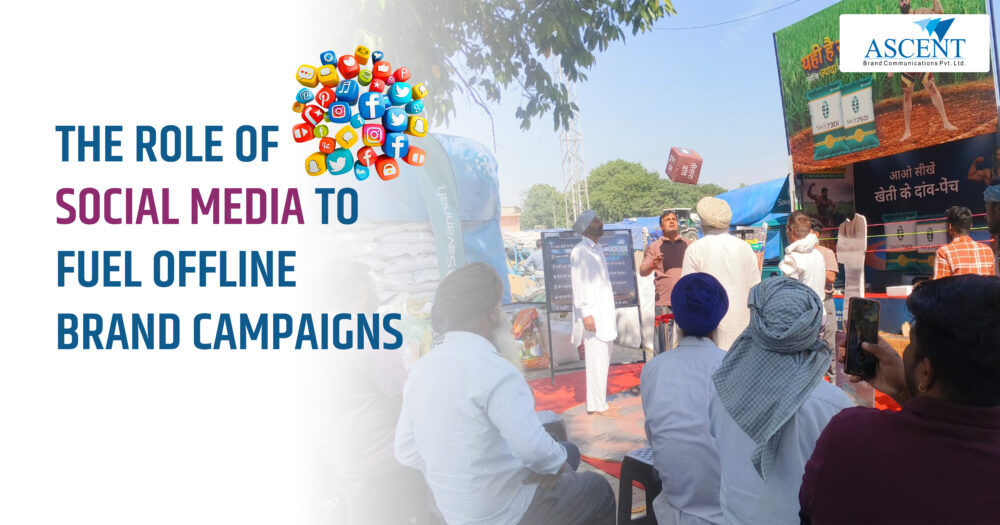
Some of the most talked about brand activations in India are now designed with social sharing built into the concept itself, rather than treated as an afterthought. Street-level stunts, pop-up installations, and festival tie-ins are created specifically to be photographed, filmed, and shared, turning a single physical activation into content that reaches a far larger audience online. What distinguishes the more effective examples is what happens immediately afterward. Brands increasingly tag every on-ground touchpoint with a unique code or QR link, capture leads through WhatsApp opt-ins or scans on the spot, and move those leads into paid digital campaigns within a day or two. This turns a one-time spike in attention from an event into a sustained acquisition channel over the following weeks, and teams that run this combined approach report meaningfully lower acquisition costs than running online and offline efforts separately.
Retail and Distribution Are Being Reshaped by Social Discovery
The link between social media and offline commerce is not limited to large brand campaigns. Even India’s vast network of small kirana and offline retail stores is being influenced by social discovery. As smartphone use and social media awareness extend into semi-urban and rural markets, these areas are increasingly described as an emerging frontier for offline retail growth, with digital platforms playing a growing role in how retailers learn about new products and how customers discover local stores in the first place. Retail technology platforms are also allowing store owners to request visits from brand representatives digitally rather than waiting for a sales call, and geo-targeted digital offers tied to specific high-footfall areas have been shown to produce meaningful spikes in local sales.
Event Marketing Still Depends Heavily on Social Platforms
For product launches, store openings, and festival campaigns, social platforms remain one of the most effective ways to build anticipation and drive attendance. Creating dedicated event pages, running countdown content, and encouraging attendees to share their own photos and videos from the event extends its reach well beyond the people who physically attended, while also generating a body of user content that can be reused in future campaigns. Regional language content plays an important role here as well, since posts and event promotions in local languages consistently generate stronger engagement than English-only messaging, particularly in tier two and tier three markets.
Building an Effective Social-to-Offline Strategy
Treat every offline touchpoint as a data capture opportunity. QR codes, unique links, and WhatsApp opt-ins at physical events or in-store should feed directly into a business’s digital audience, allowing a single moment of interest to be followed up on rather than lost.
Use creators for trust-building content, not just reach. In categories where customers need convincing before taking an offline step, a creator explaining a product’s real-world use tends to move people toward a store visit more effectively than a traditional advertisement.
Measure offline outcomes, not just online engagement. Showroom visits, inquiry calls, store footfall, and event attendance are the metrics that ultimately matter for campaigns designed to drive physical action, and should be tracked alongside impressions and clicks.
Design experiential activations to be shared. A physical activation that is visually distinctive and easy to photograph will generate far more reach through attendee sharing than one designed purely for the people present.
Localize content for regional markets. As offline growth increasingly comes from smaller towns and semi-urban markets, campaigns built around regional languages and local context perform better than a single national campaign applied uniformly.
Social media’s role in offline brand building has matured considerably. It is no longer simply a channel for building awareness before a customer eventually walks into a store on their own. It is now an active part of the decision-making journey, a way to build trust before a purchase, and increasingly, a direct mechanism for converting attention into measurable, real-world action.