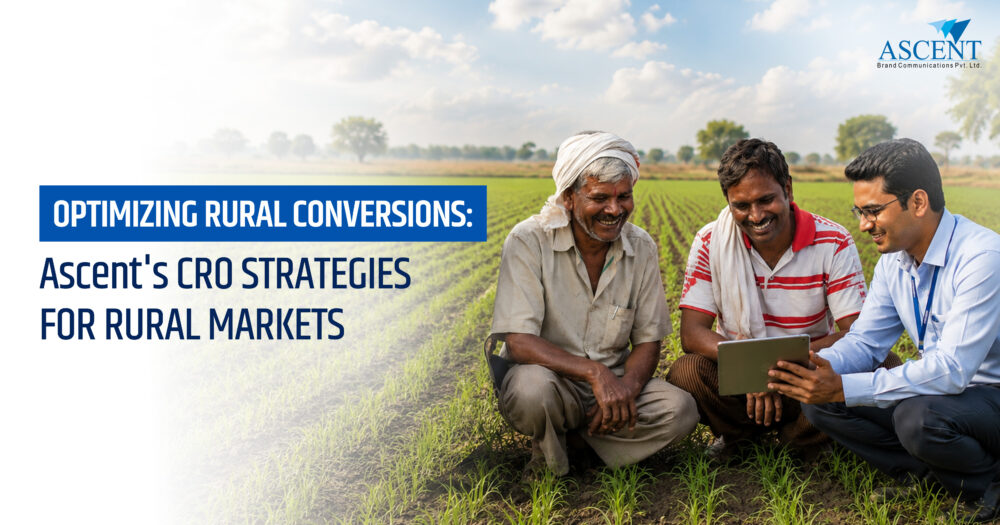
Most conversion rate optimization playbooks are written for urban, digitally native audiences. They assume reliable internet access, high smartphone penetration, and consumers who are comfortable completing an entire purchase journey online. None of that holds consistently true across rural India, which is exactly why a rural conversion strategy needs its own framework rather than a scaled-down version of an urban one.
This blueprint lays out how to think about conversion rate optimization when a meaningful share of your funnel happens offline, in a local language, and through a trusted local voice rather than a landing page.
The Scale and Shape of the Rural Opportunity
Rural India is not a niche segment. It represents roughly 65 percent of the country’s population and contributes an estimated 25 to 30 percent of national GDP, spread across more than 400 distinct ethnic and linguistic communities. A conversion strategy built for this market has to account for genuine diversity in language, income patterns, and buying behavior, not treat rural consumers as one uniform group.
| Demographic Aspect | Statistic |
| Rural population share | Approximately 65 percent of India’s total population |
| Economic contribution | 25 to 30 percent of national GDP |
| Languages in active use | 22 official languages, with many more regional dialects |
| Cultural diversity | Over 400 distinct ethnic groups |
This scale is precisely why conversion optimization matters here. A one percentage point improvement in conversion across a market this large has a materially different revenue impact than the same improvement in a smaller, saturated urban segment.
Core Challenges That Shape Rural Conversion Strategy
Before optimizing anything, it helps to understand what makes rural conversion different from urban conversion.
- Inconsistent digital access. Internet and smartphone penetration are improving but remain uneven, which means digital-only funnels will always miss a portion of the addressable market.
- Varied purchasing behavior. Local customs, festival cycles, and community norms shape when and how people buy, more than generic seasonal marketing calendars do.
- Infrastructure gaps. Poor road connectivity, inconsistent power supply, and limited retail infrastructure affect both product distribution and how consumers discover a brand in the first place.
- Lower brand familiarity. Many rural consumers are less exposed to national brand advertising, so trust has to be built rather than assumed.
- Literacy variation. Text-heavy messaging performs inconsistently across regions, making visual and audio-first content formats more reliable.
- Income seasonality tied to agriculture. Spending capacity fluctuates with harvest and sowing cycles, which directly affects when a conversion push is likely to succeed.
None of these are reasons to avoid rural markets. They are design constraints that should shape the funnel, not excuses to skip optimization altogether.
The Four-Part CRO Framework for Rural Markets
A working rural CRO program tends to rest on four connected activities.
- Deep market research before messaging is written
Surveys, focus groups, and existing sales or distribution data should shape the message before a single line of copy is drafted. Skipping this step is the most common reason rural campaigns underperform: the message is technically correct but culturally off target.
- Messaging tailored to local context
This goes beyond translation. It means using dialects, references, and value propositions that speak to challenges the audience actually experiences, whether that is crop yield, household income stability, or access to reliable service.
- A genuine multi-channel approach
Rural CRO cannot rely on a website funnel alone. Local newspapers, radio, folk media, farmer meets, community gatherings, and digital channels each play a role, and the mix should reflect how a specific region actually consumes information, not a national default.
- Continuous measurement and adjustment
CRO is not a one-time campaign fix. Tracking conversion indicators, whether that is in-store visits, dealer inquiries, or online form submissions, and running structured A/B tests on messaging and format keeps the program improving rather than stagnating after launch.
Storytelling as a Conversion Lever
Of the four elements above, storytelling deserves particular attention because it is consistently underused in rural campaigns.
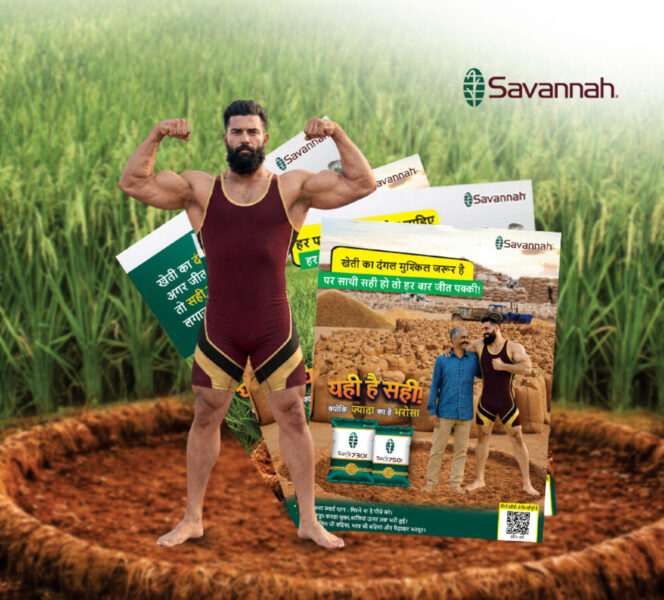
Rural audiences respond strongly to narratives that reflect their own lives: a farmer solving a real seasonal problem, a household making a practical decision, a community event that a brand genuinely supported. These stories work because they are recognizable, not because they are polished.
Language matters here in a very direct way. A large share of rural consumers prefer content in their native language over English or even Hindi, so stories told in the audience’s own dialect tend to build trust faster than translated national campaigns. Mobile video, particularly short-form content shared through platforms consumers already use, has become an effective channel for this kind of storytelling, since it does not require high literacy to land the message.
The practical takeaway: before writing a rural campaign brief, identify one real, specific story that reflects the target community’s actual experience with the category, and build the messaging around that rather than around generic product benefits.
Integrating Offline and Online Channels
Because rural infrastructure is inconsistent, treating online and offline as separate tracks usually underperforms. The more effective approach treats them as one funnel with multiple entry points.
Practical integration tactics include:
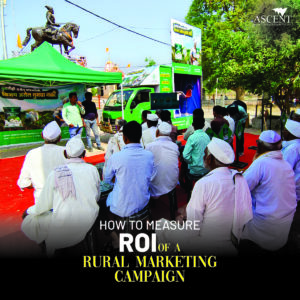
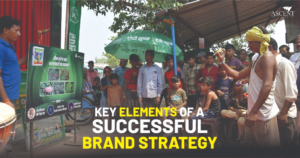
- Mobile vans equipped with audiovisual setups that bring product demonstrations directly to villages, often paired with a QR code or number for follow-up
- Sponsorship of local festivals and events, which builds visibility and trust simultaneously rather than as separate activities
- Partnerships with local influencers and community leaders, whose credibility often exceeds anything a national campaign can generate on its own
- Signage and point-of-sale materials at rural retail outlets that reinforce a message the consumer may have already seen through a mobile campaign or event
The goal is not to pick digital or traditional media. It is to make sure a rural consumer’s path from awareness to conversion is coherent regardless of which channel they encounter first.
Benchmarks Worth Tracking
Even with the offline emphasis, digital benchmarks remain useful reference points for the parts of the funnel that are measurable online.
| Metric | Typical Benchmark |
| Website conversion rate | Around 2.35 percent, varying by industry |
| Pop-up or lead capture conversion rate | Around 3.09 percent on average |
| Mobile conversion rate | Around 1.53 percent |
Given how central mobile access is in rural markets, mobile-first design and fast-loading pages are not optional details. They are one of the more direct levers available for improving the digital portion of a rural conversion funnel.
Common Mistakes That Stall Rural CRO Programs
- Running a single national campaign across every region without local adaptation
- Relying entirely on a digital funnel in areas with limited connectivity
- Measuring success only through website analytics while ignoring offline conversion signals like dealer visits or event turnout
- Using generic stock imagery instead of visuals that reflect the actual community being targeted
- Treating storytelling as a creative flourish rather than a core part of the conversion strategy
How Ascent Approaches Rural CRO
Ascent Brand Communications builds rural conversion strategy around this same structure: research first, message second, multi-channel execution third, and continuous testing throughout. Services span targeted content creation, mobile and van-based activations, influencer partnerships within rural communities, and campaign measurement across both online and offline touchpoints, so clients can see how a rural campaign is actually performing rather than only how it looks on paper.
FAQ Section
What makes rural conversion rate optimization different from standard CRO?
Rural CRO has to account for inconsistent internet access, lower digital literacy in some regions, and a funnel that often includes offline touchpoints such as in-store visits or community events, alongside standard digital metrics.
Can CRO principles work without a strong digital funnel?
Yes. The core principles of testing, measurement, and tailored messaging apply regardless of channel. In rural markets, the “conversion” being measured is often an in-store visit, a dealer inquiry, or a WhatsApp response rather than an online purchase.
How important is language localization in rural campaigns?
It is one of the highest-impact levers available. Messaging in the audience’s native dialect consistently builds trust faster than translated national campaigns.
What is the best way to start measuring rural conversion performance?
Begin by defining what a conversion actually means for the specific campaign, whether that is a store visit, a call, or a form submission, then track that consistently across every channel used, rather than defaulting to website analytics alone.