Rural India is no longer a secondary market that businesses address once urban demand plateaus. It has become one of the primary engines of consumption growth in the country, and the numbers back this up clearly. According to the Household Consumption Expenditure Survey 2023-24, average monthly per capita consumption expenditure in rural India rose 9.2 percent, outpacing the 8.3 percent rise recorded in urban areas. The rural-urban consumption gap has also narrowed, falling to 69.7 percent from 71.2 percent the previous year.
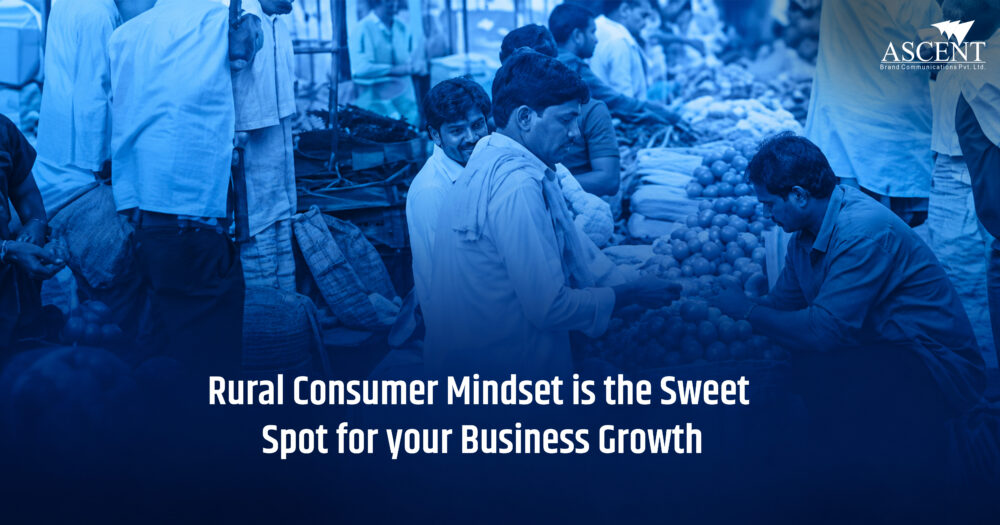
For businesses trying to decide where to invest marketing effort, this shift matters. Understanding the rural consumer mindset, not just rural demographics, is what separates brands that succeed in these markets from those that struggle to gain traction.
What Is the Rural Consumer Mindset?
The rural consumer mindset refers to the mental framework rural buyers use to interpret products and services and decide whether to purchase them. It shapes how a consumer evaluates a brand, weighs a purchase against household priorities, and decides what represents genuine value.
This mindset is built through direct experience: seeing a product, touching it, hearing about it from someone trusted, and judging whether it fits into daily life. Marketers who understand this process, rather than simply pushing a product into rural retail, are the ones who build lasting demand.
Why the Rural Consumer Mindset Has Shifted
For decades, rural markets functioned largely as sellers’ markets, where brands had little need to explain their value proposition. Purchase decisions were shaped mainly by community influence and established habits. That environment has changed substantially over the past several years.
Rising Incomes and Spending Power
Rural household incomes have climbed steadily, and spending patterns have shifted with them. Data from the Kantar and Group M Rural Barometer Report shows that the average FMCG basket size of rural households grew 60 percent in just two years, from 5.88 products in 2022 to 9.3 products in 2024. Much of this growth is coming from non-food categories such as home care and personal care, a segment that is now outpacing traditional habit-forming categories like biscuits and packaged snacks.
Premium products are following the same trend. Industry data from IBEF places affordable and super-premium products at 51 and 42 percent of rural FMCG volumes respectively, confirming that rural consumers are no longer choosing the cheapest option by default. They are choosing what they perceive as the best value for their specific needs.
Digital and Financial Access Have Closed Old Gaps
Physical access to markets, once one of the biggest barriers for rural consumers, has improved substantially through better road connectivity and rural electrification. Digital access has moved even faster. Rural internet subscriptions grew roughly 200 percent between 2015 and 2021, a pace that outstripped urban growth over the same period.
Financial inclusion has reinforced this shift. Initiatives such as UPI and the Pradhan Mantri Jan Dhan Yojana have brought a large share of rural households into the formal banking system, with roughly 67 percent of Jan Dhan accounts opened in rural or semi-urban areas. Combined with rising smartphone penetration, this has given rural consumers direct access to product information, price comparisons, and digital payments, tools that previously only urban buyers had.
Aspirations Have Caught Up With Urban India
Education and exposure to digital media have reshaped what rural consumers expect from the products they buy. Rural buyers today are actively comparing options, researching brands, and forming opinions independently rather than relying solely on word of mouth. This has pushed rural consumption patterns closer to urban ones, even as rural markets retain their own distinct preferences and price sensitivities.
The shift is visible even in categories once considered urban strongholds. Four-wheeler sales in rural India grew roughly 5 percent in a recent fiscal half-year, while urban sales fell nearly 3 percent over the same period, a clear signal that rural aspirations now extend well beyond everyday essentials.
Why This Matters for Your Business
Rural India is home to roughly two-thirds of the country’s population, spread across more than 640,000 villages that vary widely by income, literacy, infrastructure, and market access. This scale is precisely why generic, one-size-fits-all marketing rarely works here. A message calibrated for one region can fall flat in another just a few hundred kilometres away.
Businesses that treat rural India as a single homogenous market typically underperform. Businesses that invest in region-specific consumer research, understand local purchasing motivations, and adapt their messaging accordingly are the ones capturing the disproportionate share of this growth. Nielsen research has previously shown that even a small, carefully selected percentage of villages can generate a substantial jump in sales, underscoring how much precision matters over sheer reach.
How to Reach the Rural Consumer Mindset Effectively
Understanding the rural consumer mindset is only useful if it translates into a strategy. A few principles consistently separate effective rural campaigns from ones that miss the mark:
Build region-specific insight before building the campaign – Rural consumer behaviour varies by geography, so research needs to reflect the specific region being targeted rather than broad national assumptions.
Lead with tangible benefits, not brand image alone – Rural consumers respond strongly to a clear, demonstrable reason to choose a product, especially when household spending decisions involve careful trade-offs.
Use trusted local voices – Community influence remains a strong driver of rural purchase decisions, which makes localised engagement and credible local advocates more effective than broad-reach advertising alone.
Treat digital and offline channels as complementary – With rural internet usage rising sharply, digital channels now work alongside traditional rural engagement formats such as haats, melas, and van campaigns rather than replacing them.
For a deeper look at building this kind of region-specific approach, see our guide on strategic rural marketing, or explore how rural market research can help shape a strategy built around real consumer insight rather than assumptions.
Final Thoughts
Rural India’s consumer mindset has shifted from cautious and price-led to informed, aspirational, and increasingly digital. Businesses that recognise this shift early, and invest in understanding the specific motivations of the rural consumers they are targeting, stand to capture a growing share of one of the most significant consumption stories in the country.
If your business is looking to build a rural marketing strategy grounded in real consumer insight, Ascent’s rural marketing consultancy can help you plan an approach suited to the regions and audiences that matter most to your growth. Get in touch with us to discuss your next rural market initiative.