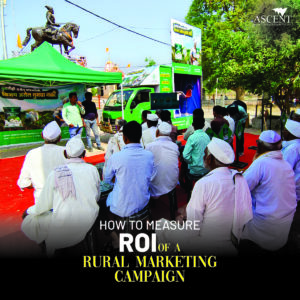
Rural marketing involves promoting and selling products and services in rural areas. It is essential because it taps into a significant market segment, contributes to economic growth, and addresses the unique needs and preferences of rural consumers in India.
Rural marketing fosters inclusive development by bridging the urban-rural divide and creating employment opportunities in rural communities.
Why Is Rural Marketing Essential?
Rural marketing in India is crucial because a significant portion of the population resides in rural areas. This market represents immense potential for various industries, including agriculture, FMCG, telecommunications, and banking. According to IBEF, rural markets account for roughly 40 percent of India’s overall FMCG market by revenue, with some leading companies earning between 30 and 45 percent of their domestic sales from rural areas, which underlines just how significant this segment is (source: IBEF, Indian Rural Market Overview).
Understanding rural consumers’ needs, preferences, and behaviours is essential for businesses to effectively penetrate and serve this market. Government initiatives like rural development programs also play a role in stimulating rural markets.
The rise of rural marketing in India is driven by factors like increasing disposable income, infrastructure development, and companies recognizing the vast untapped potential in rural areas. This is supported by NABARD’s All India Rural Financial Inclusion Survey (NAFIS) 2021-22, which found that average monthly rural household income rose from roughly Rs 8,059 in 2016-17 to Rs 12,698 in 2021-22, a rise of about 58 percent over five years (source: NABARD, NAFIS 2021-22 findings).
Additionally, government initiatives like Digital India and Make in India have further fuelled this growth by facilitating connectivity and entrepreneurship in rural regions. Various businesses and organizations continue to benefit from rural marketing, including:
- Consumer goods companies: they can target rural consumers for products like FMCG, agricultural inputs, and durable goods.
- Financial institutions: banks and microfinance institutions can provide banking and financial services tailored to the needs of rural customers, such as credit and savings products.
- Agricultural companies: agribusinesses can market farm inputs like seeds, fertilizers, and pesticides to rural farmers to improve agricultural productivity.
- Healthcare providers: hospitals, clinics, and pharmaceutical companies can offer healthcare services and products adapted to rural healthcare needs.
- Educational institutions: schools, colleges, and vocational training centres can provide educational services and training programs to rural communities.
- Government agencies: governments can implement rural marketing strategies to promote welfare schemes, infrastructure projects, and community development initiatives in rural areas.
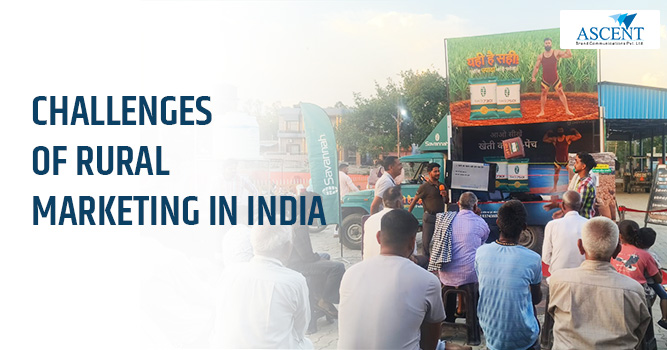
Certainly, rural advertising in India comes with its own set of challenges. Here are thirty of them, with authoritative data cited where it directly substantiates the point.
Limited Infrastructure: lack of proper roads, transportation, and connectivity hampers distribution and access to rural areas.
Low Literacy Levels: many rural consumers have limited literacy, which affects communication strategies and product understanding. The National Sample Survey Office’s 2017-18 survey recorded rural literacy at 73.5 percent, compared to 87.7 percent in urban areas, a gap that directly shapes how rural marketing messages need to be designed (source: NSO, Key Indicators of Social Consumption in India: Education).
Diverse Cultural Contexts: India’s rural areas are diverse in culture, language, and customs, making it challenging to develop a single rural marketing strategy.
Income Disparities: varying income levels within rural communities impact purchasing power and affordability. NABARD’s NAFIS 2021-22 survey found that even after significant income growth, 52 percent of rural households carried outstanding debt, which points to real limits on discretionary spending capacity across rural markets (source: NABARD, NAFIS 2021-22 findings).
Seasonal Dependence: agriculture being a primary occupation, purchasing patterns are often tied to seasonal income, affecting buying behaviour. NAFIS data shows cultivation and daily wage labour together account for the majority of rural household income, which makes rural demand especially sensitive to the agricultural calendar (source: NABARD, NAFIS 2021-22 findings).
Limited Access to Media: traditional media penetration is low, making it difficult to reach rural consumers through conventional advertising channels.
Distribution Challenges: sparse population density and remote locations make distribution logistics complex and costly.
Preference for Traditional Products: rural consumers often prefer traditional products over new alternatives, requiring innovative marketing approaches.
Lack of Awareness: limited exposure to new products and brands results in low awareness levels among rural consumers.
Trust Deficit: building trust with rural consumers can be challenging due to historical exploitation by certain brands or marketers.
Inadequate Market Research: lack of comprehensive market research in rural areas leads to a limited understanding of consumer needs and preferences.
Infrastructure Deficit: insufficient electricity, water supply, and other basic amenities impact the feasibility of rural marketing activities.
Healthcare Concerns: rural consumers often prioritize basic needs like healthcare over discretionary spending, affecting purchasing behaviour.
Cultural Sensitivity: marketing messages must be culturally sensitive to resonate with rural audiences and avoid causing offense.
Competing with Informal Economy: rural areas often have a thriving informal economy, making it challenging for formal businesses to compete.
Limited Digital Literacy: despite increasing digital penetration, rural consumers often lack the digital literacy to engage with online marketing channels effectively. A national survey on the digital education divide found that only around 4 percent of rural households possessed a computer, against 23 percent in urban households, illustrating the scale of the gap marketers need to plan around (source: NSO, Report on Education).
Last-Mile Connectivity: even if products are available, the lack of last-mile connectivity hinders their accessibility to rural consumers.
Government Regulations: complex regulatory frameworks and bureaucratic hurdles can impede marketing initiatives in rural areas.
Supply Chain Fragmentation: fragmented supply chains in rural markets increase costs and inefficiencies for marketers.
Environmental Factors: dependence on natural resources and susceptibility to climate change can disrupt marketing efforts in rural areas.
Social Dynamics: influential community leaders and social networks play a significant role in shaping consumer behaviour in rural areas.
Religious Beliefs: religious beliefs and practices can influence consumption patterns and marketing strategies in rural markets.
Price Sensitivity: rural consumers are often highly price-sensitive, necessitating strategies focused on affordability and value.
Limited Product Variants: offering a wide range of product variants may not be feasible due to low demand and economies of scale.
Educational Barriers: limited access to quality education hampers the adoption of new marketing techniques among rural entrepreneurs.
Language Barriers: language diversity poses challenges in developing marketing materials that resonate with diverse rural audiences.
Changing Demographics: shifting demographics, including rural-to-urban migration, impact consumer preferences and market dynamics.
Traditional Distribution Channels: informal channels like rural markets and local stores remain dominant, requiring tailored marketing strategies.
Legal Land Ownership: complexities surrounding land ownership and property rights can affect marketing strategies, especially for durable goods.
Infrastructure Development: lack of investment in rural infrastructure in India impedes rural advertising by constricting market development and expansion opportunities.
These challenges highlight the need for innovative and context-specific marketing approaches tailored to the unique dynamics of rural India.
Future of Marketing In Rural India
The future of rural marketing in India is likely to see continued growth and innovation, driven by factors such as increasing connectivity, rising disposable incomes, and evolving consumer preferences. This outlook is consistent with IBEF’s tracking of the sector, which has repeatedly shown rural FMCG volume growth outpacing urban growth across recent quarters (source: IBEF, FMCG Industry Analysis).
Companies will likely focus on tailored strategies that take into account the unique needs and characteristics of rural consumers, including leveraging digital platforms for outreach, offering affordable and value-driven products, and investing in last-mile distribution networks.
A rural marketing agency will give you expert advice while handling all your marketing needs from concept to implementation. This includes tracking and measuring the results of your campaigns to see what is working and what is not, so you can take corrective action.
For more digital rural marketing case studies, click here.
FAQs
What is the challenge of rural marketing?
Rural marketing struggles with low incomes, poor infrastructure, fragmented markets, and limited consumer awareness about products and services.
What are the challenges of rural development explained?
Rural development faces poverty, lack of job opportunities, poor healthcare, education gaps, and inadequate infrastructure like roads and electricity.
What are the challenges in rural communication?
Language diversity, low literacy, limited access to traditional and digital media, and cultural sensitivities make rural communication difficult.
What is the biggest challenge for rural areas?
The biggest challenge is poor infrastructure, including weak transportation networks, limited healthcare, and lack of access to quality education.
What are the limitations of rural marketing in India?
Rural marketing in India is limited by low consumer awareness, poor logistics, fragmented markets, and seasonal incomes tied to agriculture.
Sources referenced: IBEF (India Brand Equity Foundation) rural market and FMCG industry data, NABARD’s All India Rural Financial Inclusion Survey (NAFIS) 2021-22, and the National Sample Survey Office’s (NSSO/NSO) education and digital divide reporting.