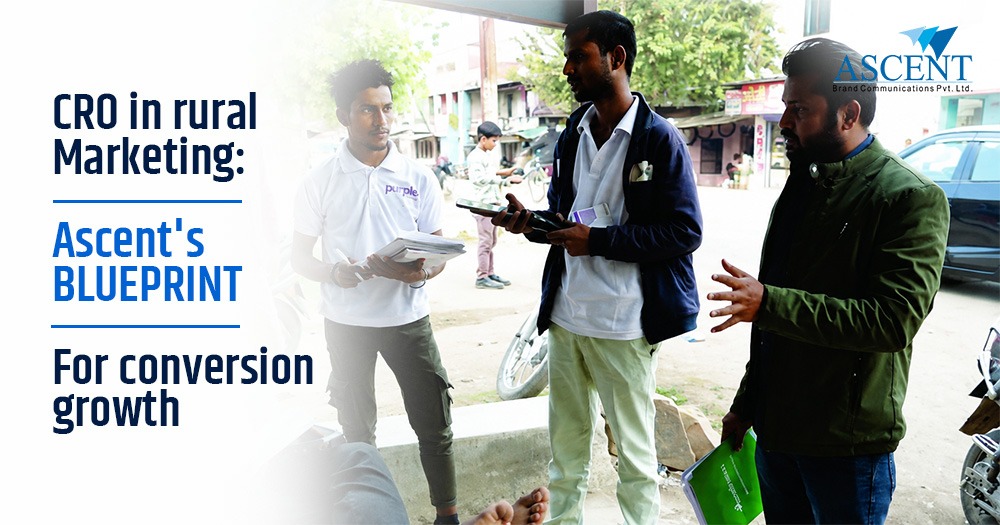
Conversion Rate Optimization, or CRO, is the practice of improving the percentage of people who take a desired action after encountering a brand. In urban digital marketing, that action is usually a website purchase or a form submission. In rural marketing, conversion has to be defined more broadly. It includes online actions, but it also includes in-store visits, dealer leads, WhatsApp inquiries, and direct sales generated through on-ground activation. A rural CRO strategy that only tracks website behavior is measuring a fraction of what actually drives revenue.
Rural India represents close to 900 million consumers, and a growing share of them are online. Yet applying an urban CRO playbook here rarely works. Rural audiences prioritize trust, affordability, and local relevance well above convenience, and any conversion strategy that ignores this will underperform no matter how much budget sits behind it.
This guide explains what CRO looks like specifically in a rural context, what factors influence rural conversion, how to build a rural conversion funnel, and how to measure results across both digital and offline channels.
What Is Conversion Rate Optimization in Rural Marketing?
In a rural context, CRO is the structured process of improving how many prospects move from initial awareness of a brand to a completed action, whether that action happens on a website, over WhatsApp, at a dealer counter, or at a community activation event. The principles are the same as urban CRO: understand the audience, remove friction, test what works, and measure results. The difference lies in where conversion actually happens and what removes friction for this particular audience.
Why Rural Conversion Requires a Different CRO Approach
Rural markets present distinct, structural challenges that shape how conversion has to be approached:
- Limited and inconsistent access to technology. Internet speed, device quality, and data affordability vary widely, which limits how effective a purely digital funnel can be on its own.
- Diverse consumer behavior. Purchasing decisions are shaped by local custom and community norms far more than by national advertising.
- Infrastructure constraints. Inconsistent roads, power, and connectivity affect both distribution and a brand’s ability to maintain consistent digital presence.
- Lower baseline brand awareness. Many rural consumers are less familiar with national brands, so education has to happen before conversion can be expected.
- Socio-cultural diversity. India’s rural population spans numerous languages and cultural contexts, and generic messaging routinely fails to land.
- Seasonal income patterns. Agricultural cycles directly affect rural spending power, so campaign timing matters as much as campaign content.
- Lower literacy in some regions. Text-heavy messaging and complex interfaces exclude a meaningful share of the audience.
Rural India accounts for roughly 65 percent of the country’s population and contributes an estimated 25 to 30 percent of national GDP, spread across a wide range of languages and cultural groups. A CRO strategy has to account for this scale and diversity rather than treating rural India as a single homogenous segment.
Understanding the Rural Consumer Conversion Journey
A useful way to structure rural CRO is around a six-stage journey, adapted from the standard conversion funnel to reflect how rural consumers actually move toward a decision:
- Awareness. The consumer first encounters the brand, often through a mix of traditional media, word of mouth, or a local activation event rather than a single digital touchpoint.
- Interest. The consumer engages further, asking questions locally or interacting with a WhatsApp message, a wall ad, or a mobile van demonstration.
- Consideration. The consumer compares the brand against known alternatives, weighing price, community opinion, and perceived reliability.
- Trust. This stage is disproportionately important in rural markets. Testimonials, visible community endorsement, and face to face interaction typically matter more here than in any other stage.
- Action. The conversion event itself: a purchase, an enquiry, a dealer visit, or a sign-up, occurring on whichever channel is most accessible to that consumer.
- Repeat engagement. Because rural purchase decisions lean heavily on relationship and community trust, a single conversion is the start of an ongoing relationship, not the end of the funnel.
Mapping content and CRO tactics to each of these stages, rather than assuming a single linear digital path, is what separates an effective rural CRO strategy from a repurposed urban one.
Key Factors That Influence Rural Conversions
Trust and credibility. Rural consumers rely heavily on peer recommendation and community endorsement before converting. Transparent pricing, visible certifications, and testimonials from recognizable local voices consistently outperform polished brand messaging alone.
Regional language communication. Consumers are significantly more likely to engage with communication in their own language and dialect. This applies across ads, WhatsApp messaging, and on-site content alike.
Local relevance. Products, offers, and messaging need to reflect local context, from festivals and seasonal cycles to regional preferences, rather than a single national campaign applied uniformly.
Dealer and influencer influence. In many rural categories, the dealer or local retailer is a primary trusted source of product information. Community leaders and local influencers carry credibility that outside advertising cannot replicate on its own.
Accessibility and availability. A strong conversion funnel means little if the product itself is not reliably available nearby. Distribution and CRO have to be planned together.
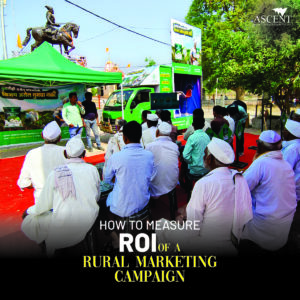
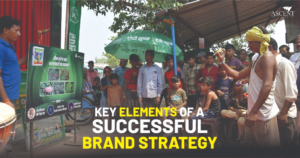
Proof and demonstration. Direct, in-person product demonstration through mobile vans, farmer meets, or local fairs frequently does more to move a prospect toward conversion than any digital ad.
Simplicity of the offer. Complex pricing structures, lengthy forms, or multi-step digital processes create friction that a rural audience is less likely to push through compared to an urban, digitally native user.
Ascent Brand Communications draws on the 4 A’s model, Availability, Acceptability, Awareness, and Affordability, to keep these factors aligned. Availability addresses distribution, Acceptability addresses local fit, Awareness addresses recognition, and Affordability addresses pricing relative to local income. Every rural CRO decision should be checked against this framework before it is implemented.
Effective CRO Strategies for Rural Markets
Hyper-Local Targeting
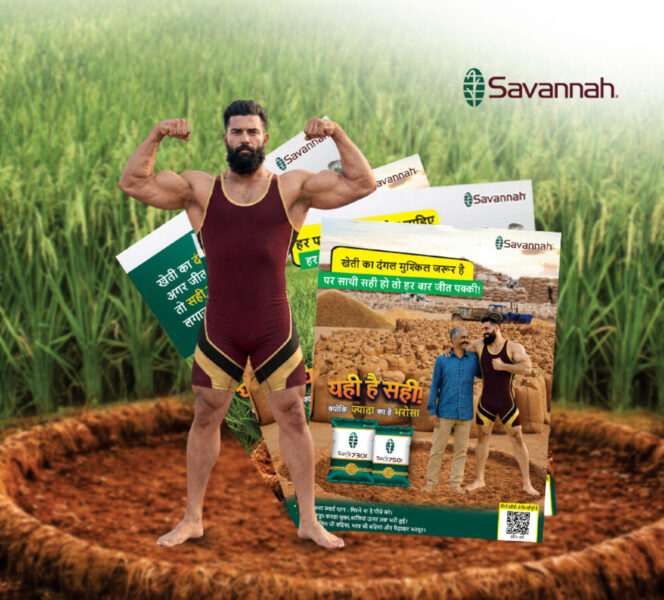
Generic, one-size-fits-all messaging underperforms in rural markets, where communities differ meaningfully in language, custom, and shopping behavior. Research from Nielsen indicates that nearly 80 percent of rural consumers engage more readily with brands communicating in their local language. By segmenting audiences down to individual village clusters and adjusting messaging for local dialect, festivals, and consumption patterns, campaigns using a local dialect instead of generic messaging have delivered engagement gains of up to 30 percent in Ascent’s own campaigns.
Combining Traditional and Digital Channels
Digital adoption in rural India is growing quickly, but traditional channels such as wall paintings, radio, and local fairs remain influential, with Nielsen reporting that traditional media still accounts for a majority share of rural ad spend. Hybrid campaigns that layer WhatsApp marketing or SMS outreach on top of a traditional radio or wall media presence tend to outperform either channel used alone, since each channel builds credibility that reinforces the other.
Building Trust as a Core CRO Lever
Trust functions as the primary conversion lever in rural markets, more so than price or convenience. Transparent communication on pricing and product origin, visible social proof from local customers or community leaders, and consistent face-to-face presence at local events all compound over time to lower the barrier to conversion.
Optimizing the Mobile Experience
With mobile as the primary gateway to the internet for most rural consumers, lightweight, fast-loading websites, voice-activated search support, and localized chatbot support all directly affect conversion. Connectivity constraints mean that a heavy, image-dense page will lose visitors before they ever reach a conversion point.
Designing Clear, Localized Calls to Action
CTAs need to be direct and framed in language the audience already uses. A CTA built around a local idiom or a specific, tangible benefit consistently outperforms a generic instruction, and repeating the CTA at natural points throughout the content, rather than only at the end, improves completion rates.
Multi-Step Forms and Simplified Funnels
Breaking a lead capture or purchase process into smaller steps, starting with low-friction questions and asking for detailed information only later, reduces drop-off. A visible progress indicator and a clear incentive for completing the form, such as a free consultation or a local discount, both improve completion rates.
How to Measure Rural Marketing Conversion
Because a meaningful share of rural conversion happens outside a website, measurement needs to combine digital analytics with offline tracking. Relevant metrics include:
- Lead conversion rate (enquiries that become confirmed leads)
- Enquiry-to-sale conversion rate
- Dealer-generated leads and dealer referrals
- Campaign response rate across channels
- Activation and event participation numbers
- Call-to-action response rate
- Landing page conversion rate, where a digital funnel exists
- WhatsApp enquiry volume and response rate
- Repeat engagement and repeat purchase rate
- Cost per lead and cost per conversion
Digital tools such as Google Analytics and Hotjar remain useful for the portion of the funnel that is online, particularly for identifying drop-off points and testing landing page variations. For the offline portion, structured dealer reporting, call tracking, and on-ground activation data collection are equally important and should be reviewed with the same regularity as digital metrics rather than treated as a separate, secondary data set.
A/B testing still applies in a rural context. Testing a message in English against the same message in a local language, or testing two CTA placements, produces a clear, actionable signal about what actually resonates with a given segment.
Common Rural CRO Mistakes
- Treating a rural campaign as a smaller version of an urban one, rather than designing for rural infrastructure, language, and trust dynamics from the start.
- Measuring success by website conversion rate alone, while ignoring dealer leads, WhatsApp inquiries, and in-person conversions, which often represent the larger share of actual results.
- Using a single national language and generic imagery across a linguistically and culturally diverse rural footprint.
- Building multi-step digital funnels for an audience where a phone call, a WhatsApp message, or a dealer visit is a more natural conversion path.
- Running a single campaign push instead of treating CRO as an ongoing cycle of testing, measurement, and refinement across a full agricultural or festival calendar.
How Ascent Approaches Rural Marketing Conversion
Ascent Brand Communications has worked in strategic rural marketing for more than two decades, across categories including agri-input, FMCG, automobile, consumer durables, and finance. The approach combines hyper-local segmentation, regional language content, and on-ground activation with digital channels such as WhatsApp and mobile-optimized landing pages so that conversion is tracked and improved across both online and offline touchpoints rather than in isolation. If you are evaluating how to build or strengthen a rural conversion strategy for your brand, Ascent’s team can walk through what that would look like for your specific category and geography.
Frequently Asked Questions
What is CRO in rural marketing?
CRO in rural marketing is the process of improving how many prospects convert into leads or customers, accounting for both digital actions like form fills and offline actions like dealer visits, WhatsApp inquiries, and in-person sales.
Why is conversion optimization important in rural marketing?
Rural markets involve real acquisition cost, whether through digital ads, activation events, or dealer engagement. CRO ensures that cost is not wasted by improving how effectively existing awareness and traffic convert, rather than only spending more to reach new prospects.
How do you improve rural marketing conversion rates?
By combining hyper-local, regional-language messaging with trust-building tactics such as testimonials and community endorsement, a mobile-first digital experience, and a funnel that reflects how rural consumers actually move from awareness to trust to action.
What factors influence rural consumer conversion the most?
Trust and community endorsement typically matter more than price alone. Local language, product availability, and simplicity of the offer are close behind.
How do you measure rural marketing conversion?
Through a combination of digital analytics for online touchpoints and structured offline tracking, including dealer-generated leads, call and WhatsApp inquiry volume, and activation participation data.
What role do dealers play in rural conversion?
In many rural categories, the dealer or local retailer is a primary trusted source of product information and often the actual point of conversion, which makes dealer engagement a core part of any rural CRO strategy rather than an afterthought.
How can regional language improve rural conversions?
Consumers engage more readily with communication in their own language and dialect. Using regional language across ads, WhatsApp messaging, and CTAs consistently improves engagement compared to generic national messaging.
Conclusion
Rural markets carry genuine growth potential, but converting that potential into results takes a CRO approach built specifically for rural realities, not a scaled-down urban strategy. Hyper-local targeting, consistent trust building, mobile-first design, and a measurement framework that captures both digital and offline conversion together form the foundation of an effective rural CRO program.
The rural landscape continues to shift as connectivity deepens and consumer expectations evolve. Treating CRO as an ongoing discipline, revisited and refined regularly rather than set up once and left alone, is what allows a rural marketing strategy to keep improving over time.