Your brand is more than a logo or a colour palette. It is the sum of every impression a customer forms about your business, from the packaging on a shop shelf to a conversation with your sales team. Choosing the right creative brand agency to shape that impression is one of the most important marketing decisions a business makes.
Yet many companies approach this decision with little structure. They shortlist agencies based on an impressive showreel or a referral, sign a contract, and discover a few months later that the partnership is not working. The cost of a poor choice goes beyond fees. It includes lost time, inconsistent messaging, and campaigns that fail to connect with the audience.
This guide explains how to evaluate a creative brand agency in a structured way, what questions to ask, which warning signs to look for, and how to find a partner who can grow with your business.
Key Takeaways
- Define your business goals and budget before you speak to any agency.
- Judge agencies on the results their work delivered, not only on how it looks.
- Look for strategic thinking, relevant industry experience, and a clear working process.
- In a market as diverse as India, an agency’s understanding of regional and rural audiences can make a significant difference.
- Treat the first meetings as a two-way assessment of fit, not a sales presentation.
What Does a Creative Brand Agency Do?
A creative brand agency helps a business define who it is, what it stands for, and how it should communicate. The scope usually covers three areas.
Brand strategy. This includes market research, audience insights, brand positioning, and the core message that sets the business apart from competitors.
Brand identity. This is the visual and verbal expression of the brand: logo, typography, colour system, tone of voice, packaging, and brand guidelines.
Brand communication and activation. This is where the brand meets its audience through advertising, digital campaigns, events, retail activations, and on-ground engagement.
Some agencies specialise in one of these areas. Others, often described as integrated marketing agencies, handle all three and connect them into a single strategy. Knowing which type you need is the first step toward a good decision.
Signs Your Business Needs a Brand Agency
Not every business needs a full-service agency at every stage. However, the following situations usually indicate that external expertise will add value:
- You are launching a new product, entering a new market, or rebranding after a merger.
- Your messaging feels inconsistent across channels, regions, or teams.
- Sales are stable, but customers struggle to explain what makes you different.
- You plan to expand into Tier 2, Tier 3, or rural markets and lack local insight.
- Your internal team has strong execution skills but limited time for strategic planning.
How to Choose the Right Creative Brand Agency: A Step-by-Step Approach
1. Define Your Goals Before You Start Looking
An agency can only deliver what you ask for. Before contacting anyone, write down what you want to achieve and how you will measure it.
Compare two briefs. “We need a new brand identity” gives an agency very little direction. “We need to reposition our dairy brand to appeal to urban families while retaining trust among existing rural customers” gives them a clear problem to solve. The second brief will attract more relevant proposals and make comparison far easier.
Useful questions to answer internally include: What problem are we solving? Who is our primary audience? What does success look like in six months and in two years?
2. Set a Realistic Budget and Engagement Model
Be open about your budget early in the process. Agencies structure their teams and recommendations around available resources, and a clear budget prevents wasted time on both sides.
Also decide which engagement model suits you:
- Project-based: Suitable for a defined task such as a rebrand or a product launch campaign.
- Retainer: Suitable for ongoing brand management, content, and campaign support.
- Hybrid: A retainer for core services with separate budgets for large campaigns or activations.
3. Look for Relevant Industry and Market Experience
An agency does not need to have worked with your direct competitors, but it should understand the dynamics of your category. Marketing a tractor brand to farmers requires different insight from marketing a fintech app to young professionals.
Ask whether the agency has worked with businesses facing similar challenges, audiences, or distribution models. Experience with comparable audiences often matters more than experience in the exact same industry.
4. Evaluate Results, Not Just Portfolios
A polished portfolio shows creative capability. It does not show whether the work delivered business value. When reviewing past work, ask what the objective was, what the agency did, and what changed as a result.
Strong case studies explain the challenge, the approach, and measurable outcomes such as improved brand recall, higher footfall, increased enquiries, or better campaign reach. If an agency can only show attractive visuals with no context, treat that as a gap worth exploring.
5. Assess Strategic Thinking
The best agencies ask thoughtful questions before they propose solutions. During early conversations, notice whether the agency tries to understand your business, customers, and competitors, or moves straight to design ideas.
A useful test is to share a real challenge and ask how they would approach it. You are not looking for a finished answer in the first meeting. You are looking for a logical process and genuine curiosity about your business.
6. Check Whether They Can Deliver Across Channels
Customers experience your brand across many touchpoints: social media, search, television, retail stores, events, and in some cases village haats and local melas. An agency that can plan and execute across both digital and on-ground channels helps keep your message consistent.
If an agency specialises in only one area, ask how they coordinate with other partners. Fragmented execution is one of the most common reasons brands lose consistency.
7. Understand the Team and the Process
Find out who will actually work on your account. In some agencies, senior leaders run the pitch and junior staff handle the work afterward. Ask to meet the core team and understand their roles.
Also ask about the agency’s process. How do they gather inputs? How many rounds of revisions are typical? How are timelines and approvals managed? A clear process reduces delays and misunderstandings.
8. Agree on How Success Will Be Measured
Reporting should be discussed before the contract is signed. Agree on the metrics that matter, how often they will be reported, and what happens if targets are not met.
Depending on your objectives, relevant measures might include brand awareness, share of voice, lead quality, engagement rates, event participation, or sales uplift in specific regions.
9. Consider Cultural Fit and Check References
A brand partnership is a working relationship that may last several years. Shared values, open communication, and mutual respect matter.
Speak to two or three current or former clients. Ask how the agency handled tight deadlines, feedback, and unexpected problems. These conversations often reveal more than any presentation.
Questions to Ask a Creative Brand Agency Before Signing
Use these questions during your evaluation meetings:
- What is your understanding of our business and the challenge we have shared?
- Can you walk us through a case study similar to our situation, including the results?
- Who will lead our account, and who will be on the day-to-day team?
- What does your research and strategy process look like?
- How do you handle feedback and revisions?
- Which metrics would you recommend we track, and how will you report on them?
- How do you integrate digital and on-ground activities?
- What would you need from our team to make this partnership successful?
Red Flags to Watch For
Some warning signs are easy to miss during a positive pitch meeting. Be cautious if an agency:
- Guarantees specific results without understanding your business.
- Presents finished creative work before asking about your audience or objectives.
- Is unclear about costs, timelines, or what is included in the scope.
- Cannot explain the outcomes of its previous work.
- Says yes to every request without offering an independent perspective.
- Has high staff turnover or cannot tell you who will work on your account.
Agency, In-House Team, or Freelancer?
Many businesses weigh an agency against building an internal team or hiring freelancers. Each option has its place.
| Factor | Creative Brand Agency | In-House Team | Freelancers |
| Range of skills | Broad, across strategy, design, digital, and activation | Limited to the people hired | Usually specialised in one skill |
| Scalability | Can scale up for large campaigns | Slow to scale | Depends on availability |
| Market perspective | Draws on experience across many brands | Deep knowledge of your business | Varies widely |
| Cost structure | Project or retainer fees | Salaries and overheads | Per project or hourly |
| Best suited for | Brand strategy, integrated campaigns, market expansion | Ongoing daily content and coordination | Specific, short-term tasks |
In practice, many growing businesses use a combination: an in-house team for daily coordination and an agency for strategy, large campaigns, and specialised execution.
Why Market Understanding Matters in India
India is not one market. It is many markets with different languages, buying habits, media preferences, and cultural references. A campaign that performs well in Mumbai may not connect with customers in rural Madhya Pradesh or small towns in Tamil Nadu.
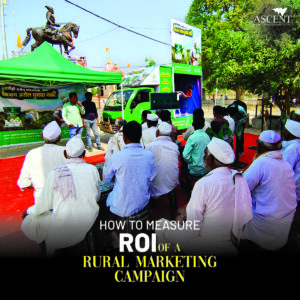
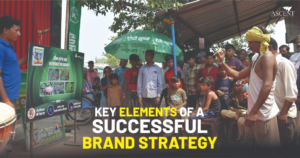
This is particularly important for brands in FMCG, agriculture, automobiles, financial services, and consumer durables, where a large share of future growth is expected to come from smaller towns and rural areas. Reaching these audiences often requires a mix of regional language communication, on-ground activations, van campaigns, retailer engagement, and locally relevant digital content.
When evaluating an agency, ask how they have reached audiences beyond metro cities and what they learned from that work.
How Ascent Brand Communications Approaches Brand Partnerships
At Ascent Brand Communications, we believe effective branding starts with a clear understanding of the audience, wherever they are. Our work spans brand strategy, brand activation, rural marketing, experiential marketing, digital marketing, employer branding, and corporate communication.
This integrated approach allows us to connect strategic thinking with on-ground execution, so a brand’s message stays consistent from a digital campaign in a metro city to an activation in a rural market. We begin every partnership by understanding the business challenge before recommending solutions.
Conclusion
Choosing the right creative brand agency is a strategic decision, not a purchasing exercise. Start with clear goals, evaluate agencies on their thinking and their results, and take time to understand how they work and who will be on your team.
The right partner will challenge your assumptions, understand your customers, and help your brand stay consistent as your business grows.
If you are planning a brand launch, rebrand, or expansion into new markets, [get in touch with Ascent Brand Communications] to discuss how we can help.
Frequently Asked Questions
What is a creative brand agency?
A creative brand agency helps businesses build and communicate their brand. Its services typically include brand strategy, positioning, visual identity, messaging, advertising, and brand activation across digital and offline channels.
How do I choose the right branding agency for my business?
Start by defining your goals and budget. Then evaluate agencies on relevant experience, measurable results from past work, strategic thinking, team structure, working process, and cultural fit. Speaking with past clients is also valuable.
How much does it cost to hire a brand agency in India?
Costs vary widely depending on the scope, the size of the agency, and the engagement model. A focused identity project costs far less than an integrated campaign that includes research, digital marketing, and on-ground activations. Sharing your budget early helps agencies propose a realistic plan.
What is the difference between a branding agency and an advertising agency?
A branding agency focuses on defining who the brand is, including its positioning, identity, and messaging. An advertising agency focuses on creating and placing campaigns to reach audiences. Integrated agencies offer both.
How long does a branding project usually take?
A brand identity project typically takes anywhere from a few weeks to a few months, depending on the depth of research, the number of stakeholders, and the range of deliverables involved.
Should I choose a local agency or a national agency?
It depends on your market. If you operate across several states or plan to reach rural and semi-urban audiences, choose an agency with proven reach and understanding of those regions, regardless of where it is based.