A rural marketing campaign can look simple on paper: pick the districts, design the creative, send out the vans and run activations. In practice, it is one of the most demanding forms of marketing to plan and execute.
Campaigns often cover hundreds or thousands of villages spread across several states. Roads may be poor, weather can change plans overnight and every district has its own language, festivals, crops and buying cycles. Field teams, vehicles, materials, permissions and reporting all have to come together on the same day, far from head office.
The familiar advice to plan your work and then work your plan applies strongly here. Small oversights at the planning stage become costly problems in the field. That is why experienced rural marketers rely on a clear set of principles and a detailed checklist.
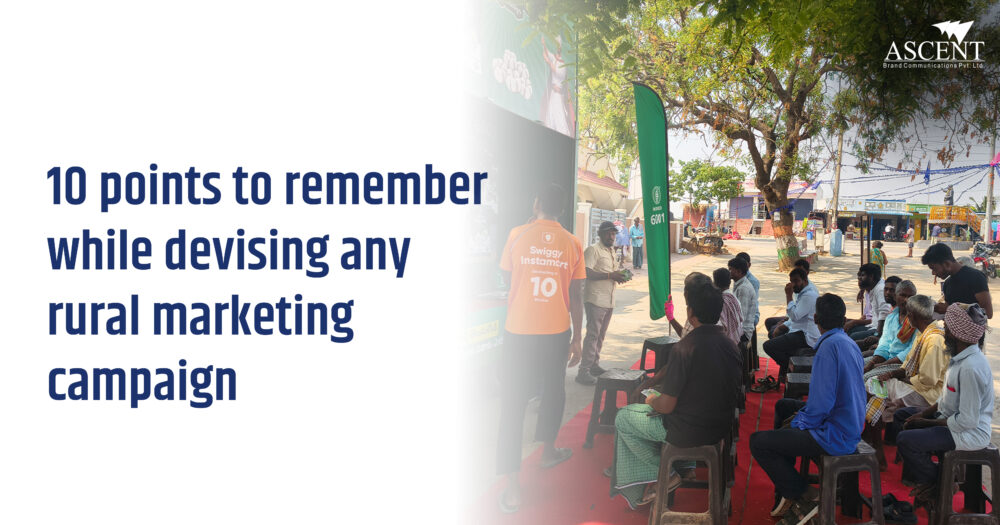
Drawing on more than 25 years of planning and executing rural campaigns across India, here are the ten points we believe every brand and agency should keep in mind.
1. Plan for What Could Go Wrong
Accountants follow a principle called conservatism: anticipate possible losses and prepare for them in advance. It is equally useful in rural marketing.
Before finalising any campaign, list the risks that could disrupt it and plan a response for each. Common risks include:
- Weather: monsoon rains, heatwaves and floods can cut off roads and empty village markets.
- Agricultural cycles: during sowing and harvest, farmers have little time for meetings or events.
- Festivals and local events: these can boost footfall at melas and haats, or make villages difficult to access.
- Elections: during election periods, restrictions on gatherings, vehicles and publicity can affect activities.
- Permissions: local authorities, panchayats and market committees may require approvals.
- Logistics: vehicle breakdowns, material shortages and manpower absences.
Build buffer days into the schedule, keep backup vehicles and materials, and plan alternative routes or venues for high-risk areas.
2. Start With a Clear Brief From the Brand
The people who commission the campaign hold much of the information needed to plan it well. Do not leave them out of the planning process.
A strong brief should cover the campaign objective, target audience, priority markets, key messages, budget, timelines and how success will be measured. It should also include learnings from previous campaigns, current sales performance and input from the brand’s regional sales teams, who often know the ground realities better than anyone.
A clear brief at the start prevents costly changes later.
3. Research the Market Before You Plan
Knowledge is the foundation of every good rural campaign. Before choosing routes, messages or formats, understand:
- The audience’s profile, occupation, income patterns and buying behaviour.
- Local languages, dialects and cultural sensitivities.
- The crop and seasonal calendar in each district.
- Retail and distribution coverage, including which villages are served by which outlets.
- Weekly haats, mandis, melas and other congregation points.
- Competitor activity and pricing.
- Local influencers such as progressive farmers, retailers, sarpanches and SHG leaders.
Ascent’s rural market research and strategic rural planning services are designed to provide this groundwork.
4. Respect That Rural Markets Are Different
Rural markets are not smaller versions of urban markets. Treating them the same way is one of the most common reasons campaigns fail.
Rural consumers often make decisions collectively, rely heavily on word of mouth and trusted local voices, and prefer to see a product work before buying it. Purchases are closely linked to harvests and seasons. Retail is dominated by small outlets where the shopkeeper’s recommendation carries real weight.
At the same time, rural India is changing quickly. Rural areas now account for about 548 million active internet users, according to the IAMAI and Kantar Internet in India Report 2025. Campaigns need to respect traditional behaviour while also using the digital channels rural consumers now use every day.
5. Understand What the Audience Really Values
Knowing the audience’s needs is only the start. The campaign must also understand what they value and what it will take to earn their attention and trust.
For most rural audiences, this means clear proof of benefit, value for money, reliability and after-sales support. A farmer wants to know whether a seed will improve his yield. A shopkeeper wants to know whether a product will sell and give a fair margin. A household wants to know whether a product is worth the money compared with what they already use.
Build the campaign around answering these questions directly, and budget for the elements that deliver proof, such as demonstrations, trials, samples and testimonials.
6. Choose the Right Message and the Right Medium
The purpose of a rural campaign is to deliver a message, so information is essential. But how that message is delivered matters just as much.
Messages should be simple, specific and in the local language. They should be delivered through formats rural audiences trust and enjoy, such as:
- Rural van campaigns with audio-visual shows and product displays.
- Farmer meets and field demonstrations.
- Folk media such as street plays, songs and storytelling.
- Games, quizzes and contests. See Ascent’s gamification in BTL marketing service.
- Regional-language video and WhatsApp communication for follow-up and reach beyond the event.
Ascent example: For TVS Credit’s “Samridhi ka Shubharambh” campaign across Uttar Pradesh, Rajasthan and Madhya Pradesh, Ascent needed to explain tractor financing and other loan products to farmers, who approach financial decisions carefully. Rather than relying on leaflets alone, the campaign used storytelling, interactive games and giveaways alongside brand activation, telemarketing and posters, making product features easy to understand and remember.
7. Plan Every Element Together, Not One at a Time
A rural campaign has many moving parts: creative development, media and format selection, route planning, touchpoint identification, manpower, training, vehicles, materials, permissions, retail tie-ups, digital follow-up and reporting. Focusing heavily on one area while neglecting the others weakens the whole campaign.
For example, excellent creative will not help if the van reaches the village after the haat has ended, or if the retailer has no stock when interested customers arrive. Every element needs its share of time and attention.
Ascent example: For the “Khet Se Bazaar Tak” campaign, Ascent handled product communication across four hybrid seed launches. Coordinating messaging, materials and farmer engagement across multiple products required each element to be planned together so the launches reinforced one another rather than competing for attention.
8. Use a Detailed Checklist
Even experienced teams forget things when managing a large campaign. Instead of relying on memory, use a written checklist that covers every stage from planning to reporting. It helps prevent errors of omission and makes handovers between teams smoother. A sample checklist is included below.
9. Stay Calm and Adapt in the Field
Something will almost always go differently from the plan. A road may be closed, a venue may change or turnout may be lower than expected. Many of these issues are small bumps rather than real obstacles.
Panic makes problems worse. Field teams should be trained to assess the situation calmly, follow agreed contingency plans and escalate issues quickly. Real-time reporting through mobile apps, geo-tagged photos and daily updates helps campaign managers spot problems early and adjust routes, timings or resources. Ascent’s technology-led engagement and rural data management solutions support this.
10. Treat the Campaign as a Process, Not a One-Time Task
A rural campaign does not end when the last van returns. Measure what was achieved, compare it with the objectives, and capture what worked and what did not. Follow up on leads through dealers, call centres and WhatsApp to turn interest into sales.
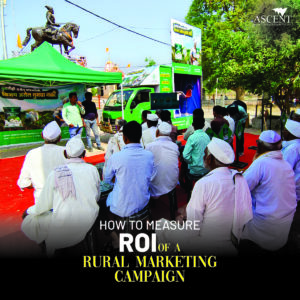
Brands that build rural presence over several seasons earn far more trust than those that appear once and disappear. Each campaign should build on the last. Ascent’s guide on how to measure ROI of a rural marketing campaign explains how to set this up.
Rural Marketing Campaign Checklist
Stage |
What to Confirm |
| Brief | Objectives, KPIs, target audience, markets, budget and timelines agreed with the brand |
| Research | Audience insights, language, crop calendar, haats and mandis, retail coverage and competitor activity |
| Risk planning | Weather, harvest, festival and election periods checked; buffer days and backups in place |
| Messaging | Simple, local-language messages with clear proof points |
| Formats | Van campaigns, farmer meets, demonstrations, folk media, games and digital follow-up selected |
| Routes and touchpoints | Village and market routes mapped with dates and timings |
| Permissions | Approvals from local authorities, panchayats and market committees secured |
| Manpower | Field teams recruited, trained and briefed on product, messaging and conduct |
| Materials and vehicles | Branding, samples, displays, audio-visual equipment and vehicles ready, with backups |
| Retail and dealers | Stock availability, retailer briefing and lead-sharing process confirmed |
| Reporting | Daily reporting, geo-tagged evidence and lead capture tools set up |
| Follow-up | Call centre, WhatsApp and dealer follow-up plans ready |
| Measurement | Post-campaign review against KPIs, with learnings recorded for the next campaign |
Common Mistakes to Avoid
Several mistakes regularly weaken rural campaigns. Running urban creative with only a translated tagline rarely connects. Scheduling activations during peak harvest or major local events can lead to empty venues. Generating interest without ensuring stock at nearby retailers wastes effort. Relying on paper reports makes it hard to verify activity or act quickly. And ending the campaign without following up on leads leaves much of the value unrealised.
Frequently Asked Questions
How do you plan a rural marketing campaign?
Start with a clear brief and market research, then plan for risks such as weather, harvest cycles and local events. Develop simple local-language messages, choose trusted formats such as van campaigns and farmer meets, map routes and touchpoints, prepare manpower and materials, and set up reporting, follow-up and measurement.
What are the most important factors in a rural marketing campaign?
The most important factors are understanding the audience, choosing the right timing, using the local language, providing clear proof of benefit, reaching people where they gather, ensuring product availability and measuring results.
When is the best time to run a rural marketing campaign?
It depends on the category and region. Agri-input campaigns usually work best just before sowing seasons, while consumer products often benefit from post-harvest periods and festival seasons, when rural incomes and spending are higher.
Why do rural marketing campaigns fail?
Common reasons include treating rural markets like urban ones, poor timing, weak or overly complex messaging, lack of product availability, inadequate field supervision and no follow-up after the campaign.
How do you measure the success of a rural marketing campaign?
Track villages covered, footfall, demonstrations, samples distributed, leads captured and conversions, supported by geo-tagged evidence. Link these results to sales data in the campaign areas to understand the return on investment.
Conclusion
Rural marketing campaigns succeed when careful planning meets disciplined execution. Anticipating risks, working closely with the brand, researching the market, respecting rural realities, choosing the right messages and formats, planning every element together and measuring results all make the difference between a campaign that looks good on paper and one that delivers real growth.
Ascent has planned and executed rural campaigns for brands across agri inputs, financial services, building materials, consumer durables and FMCG, including UltraTech Cement’s “Baat Ghar Ki: On Wheels”, Syngenta Paahi (HPH 2050) and the Orient Paper BTL campaign. Explore our strategic rural marketing and BTL marketing services, or read more about the role of a BTL marketing agency in transforming rural markets.