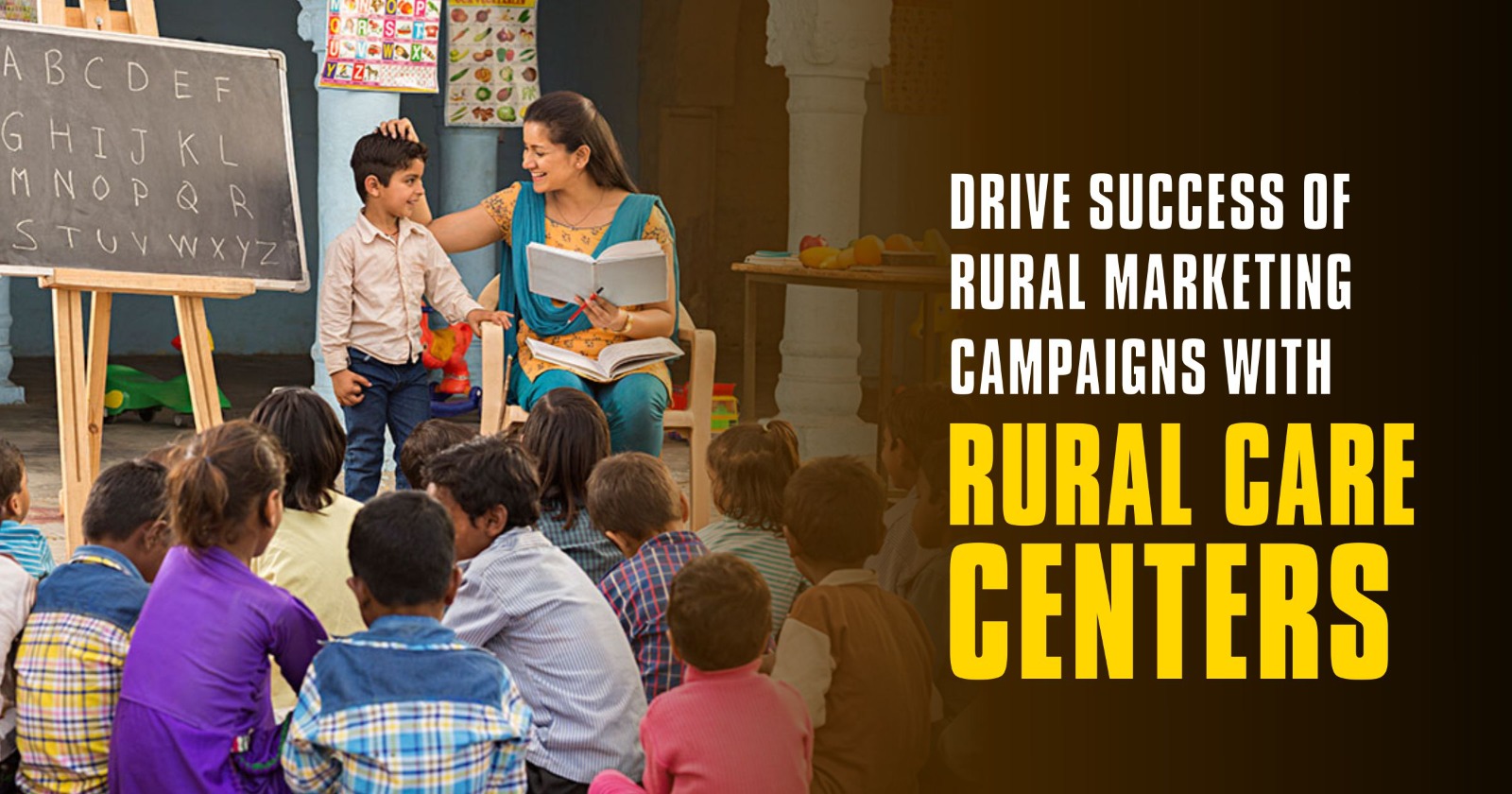
Anganwadis, ASHAs, and Self-Help Groups are not marketing organizations. None of them exist to help a brand sell more. But because of what they actually do in a village, day after day, they end up occupying a position that very few marketing touchpoints ever reach: people trust them.
That trust is the reason this article exists. Marketers who understand how these networks function, and who engage with them the right way, can reach rural audiences more effectively than they would through paid media or one-off activations alone. This is not a claim that partnering with these networks guarantees campaign success. It is an explanation of why they matter, and how a brand can work with them without overstepping what they are actually there to do.
What Are Rural Care Centers?
In the context of this article, rural care centers refer to three specific, existing institutions that provide primary-level care and support in rural India: Anganwadi centres, ASHA workers, and Self-Help Groups.
Anganwadi centres were established under India’s Integrated Child Development Services scheme in 1975, primarily to address malnutrition and support early childhood education. Anganwadi workers track children’s growth, prepare and serve meals, run basic preschool education, and counsel women on nutrition, family planning, and child care. According to the Ministry of Women and Child Development, close to 1.4 million Anganwadi centres are operational across the country today, making this one of the largest community outreach networks anywhere in the world.
ASHA, or Accredited Social Health Activist, workers are village-level health volunteers introduced under the National Health Mission in 2005. They connect rural households to India’s formal health system, supporting maternal and child health, immunization, and general health awareness. Peer-reviewed research on the program has found that access to ASHA services is associated with meaningful improvements in maternal care: a 17 percent increase in women completing a first antenatal care visit, a 26 percent increase in births attended by a skilled professional, and a 28 percent increase in facility-based deliveries, compared to areas without ASHA coverage.
Self-Help Groups, or SHGs, are small, community-based groups, typically 10 to 20 members, formed around a shared economic background and a shared savings or livelihood goal. Under the Deendayal Antyodaya Yojana-National Rural Livelihoods Mission, more than 10 crore rural women have now been mobilized into upwards of 90 lakh SHGs across the country, making this the largest network of women’s community groups in the world.
None of these three networks were created for marketing purposes. That is precisely what makes them valuable. They exist because of a genuine, ongoing relationship with the community, not a campaign-length one.
Why These Networks Matter in Rural Marketing
A brand new to a rural market usually starts from zero trust. Anganwadi workers, ASHAs, and SHG members do not have that problem, because they are already part of the community they serve.
This matters for a few concrete reasons. Anganwadi and ASHA workers visit the same households repeatedly over months and years, not once during a campaign window. They are local, so they understand the specific dynamics, dialect, and daily rhythm of the villages they serve, rather than applying a template built for a different region. And because their work already touches health, nutrition, and family welfare, people are used to taking their advice seriously in exactly the categories many rural-facing brands operate in.
None of this happens automatically just because a brand mentions these networks in a campaign brief. It happens when a brand engages them appropriately, respects the boundaries of what they are there to do, and builds a relationship that genuinely benefits the community, not just the campaign.
How Rural Care Centers Can Support Rural Marketing Campaigns
There are a handful of ways these networks realistically intersect with rural marketing, without asking Anganwadi workers, ASHAs, or SHG members to become sales agents, which would be both inappropriate and counterproductive to the trust that makes them valuable in the first place.
Awareness and information sharing. Where a product or service is genuinely relevant to health, nutrition, or family welfare, such as fortified food products, hygiene products, or health-linked financial products, these networks can be a credible channel for factual information sharing, provided it is done transparently and does not blur into unsolicited selling.
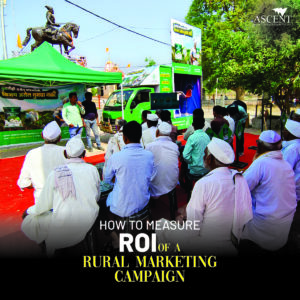
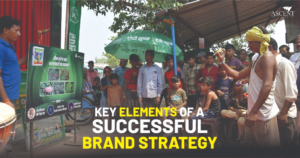
Community events and gatherings. SHG meetings and Anganwadi-linked community events already bring people together on a regular basis. Brands running local activations, demonstrations, or CSR-linked initiatives can align with these existing gathering points rather than trying to create demand for a brand-new one.
Feedback and local insight. Because these workers are embedded in the community, they often have a realistic read on what will and will not land with local audiences. Brands doing rural market research can benefit from that perspective, gathered ethically and with proper consent, rather than relying solely on outside assumptions.
Retail and distribution context. SHGs in particular often run small local enterprises and have direct relationships with village-level retail. Where relevant, this can inform how a brand thinks about last-mile distribution and dealer engagement in a specific area, alongside its own rural distribution planning.
The common thread across all of these is that the brand is working alongside the network’s existing purpose, not redirecting it toward a sales objective.
Building Trust Through the Right Kind of Engagement
Trust built over years does not transfer to a brand automatically just because a campaign references these networks. It transfers when the engagement is handled with the same seriousness the community already extends to Anganwadi workers, ASHAs, and SHG members.
In practice, that means being transparent about who is actually funding or running an activity, avoiding any suggestion that a commercial message carries the same authority as health or nutrition guidance, and making sure any financial support offered to these networks is a genuine value exchange rather than a disguised incentive to push a product. Volunteers and workers who receive fair, transparent support for their additional effort are, understandably, more motivated to participate meaningfully, but that support has to be structured honestly.
This is also where the diversity of rural India matters. A Self-Help Group’s priorities in coastal Tamil Nadu will not look the same as one in rural Bihar or the hill districts of Uttarakhand. Income levels, occupations, literacy, language, and infrastructure all vary significantly by geography, and a strategy built around a single, generic idea of “rural India” will not travel well across these differences.
Connecting Offline Relationships with Digital Follow-Up
These networks are fundamentally offline and relationship-based, and that should not change. But there is a reasonable, light-touch way to extend their reach without disrupting how they actually work.
Where an SHG or Anganwadi-linked event generates genuine interest in a brand’s product or service, a simple mechanism such as a WhatsApp number, an SMS shortcode, or a QR code can let interested households follow up on their own terms, at their own pace, rather than requiring an on-the-spot decision. This works because it respects the fact that the relationship with the community worker is the primary trust driver, while giving the brand a low-friction way to continue the conversation afterward. This is not the place for a broader digital marketing strategy. It is simply a bridge for people who want more information after an offline interaction.
Measuring the Impact of Rural Care Center Engagement
Because these networks are not sales channels, measurement should reflect what actually changes as a result of engagement, not manufactured sales attribution.
Reasonable things to track include how many households or community members were reached through a given activity, the quality and depth of engagement at events tied to these networks (questions asked, samples genuinely wanted rather than just accepted), any measurable uptake in follow-up channels like a WhatsApp number or helpline, and qualitative feedback gathered from the Anganwadi workers, ASHAs, or SHG members themselves about how the engagement was received locally.
What should not be claimed is a direct, attributable sales figure tied to a single event or interaction, unless a brand has a specific, verifiable tracking mechanism in place, such as a redeemable coupon code distributed only through that channel. Absent that kind of mechanism, attributing sales growth to a single touchpoint in a broader campaign is not a defensible claim.
Common Mistakes to Avoid
A few patterns tend to undermine campaigns that try to work with these networks.
Treating Anganwadi workers, ASHAs, or SHG members as an unpaid distribution channel, rather than compensating their time and effort fairly, tends to damage the relationship quickly, and word travels fast within these networks. Applying a single national campaign approach across regions with very different languages, incomes, and cultural norms tends to underperform, since what works in one state often does not translate directly to another. And treating a single activation as the whole strategy, rather than building a sustained, respectful relationship over time, misses the entire reason these networks are valuable in the first place: consistency, not one-off reach.
Why the Right Rural Marketing Partner Matters
Engaging with Anganwadi, ASHA, and SHG networks well requires more than good intentions. It requires understanding how these institutions actually function, what boundaries matter, and how to structure a genuinely fair and transparent relationship with the people involved.
This is the kind of ground-level understanding that strategic rural marketing work depends on. It combines proper rural market research with practical, on-the-ground execution experience, rather than treating rural India as a single audience to be reached with one message.
If you are planning a rural marketing campaign and want to build stronger, more consistent engagement with rural consumers, Ascent can help you design and execute a strategy suited to your specific market. Get in touch with Ascent to talk through what you are trying to achieve.
Frequently Asked Questions
What is a rural care center?
In the context of rural marketing, this refers to existing community institutions such as Anganwadi centres, ASHA workers, and Self-Help Groups, which provide health, nutrition, and livelihood support in rural India and are deeply trusted within their communities.
How do rural care centers support rural marketing campaigns?
They can support awareness of genuinely relevant products, provide a natural point of contact at existing community gatherings, offer grounded local insight for market research, and in some cases connect to local retail through SHG members, provided all of this is done transparently and respectfully.
Why are these networks useful for brand engagement in rural India?
Because they are already part of the community on an ongoing basis, not a one-time campaign presence, which gives them a level of trust that most outside marketing touchpoints take much longer to build, if they build it at all.
How can brands measure the impact of engaging with these networks?
Through reach, engagement quality, uptake on follow-up channels like WhatsApp or SMS, and direct feedback from the workers or members involved, rather than through unverified sales attribution to a single touchpoint.
How do rural care centers help build trust in rural markets?
Trust builds through consistent, transparent, fairly compensated engagement over time, not through a single activation that treats these networks as a free distribution channel.