
Rural India is one of the most important growth markets in the country. It is home to the majority of India’s population, and its consumers are buying more, earning more, and connecting to the digital world faster than ever before.
The numbers reflect this shift. According to NielsenIQ, rural FMCG volume growth in the September 2025 quarter stood at 7.7% and outpaced urban markets for the seventh consecutive quarter. On the digital side, the IAMAI and Kantar Internet in India Report 2025 found that rural India accounts for 57% of the country’s active internet users, or around 548 million people.
Yet many brands still struggle in rural markets. They apply urban campaigns with minor changes, underestimate the diversity of rural audiences, or rely on a single channel. Success in rural India requires a different approach, one built on local understanding, trust, and consistent presence.
This article outlines six rural marketing strategies that help brands build awareness, earn trust, and drive sales in rural India.
Key Takeaways
- Rural India is not one market. Strategies must reflect regional differences in language, culture, income, and buying habits.
- Trust is built through local presence, familiar faces, and product proof, not advertising alone.
- Digital is now a powerful rural channel, but it works best alongside on-ground activation.
- Affordability, availability, and retailer relationships are as important as communication.
Why Rural Marketing Needs a Different Approach
Rural consumers are practical, value-conscious, and loyal once trust is earned. Their decisions are often shaped by family, neighbours, local retailers, and community influencers. Income can be seasonal and linked to harvests. Media habits vary widely from one district to the next.
Literacy has improved significantly but remains uneven. Rural India’s literacy rate for people aged seven and above rose from 67.77% in 2011 to 77.50% in 2023-24, while rural female literacy rose from 57.93% to 70.40% over the same period. This means a large share of rural consumers can read, but simple, visual, and spoken communication still reaches people far more effectively than text-heavy messaging.
These realities shape every part of rural marketing, from the message and the medium to pricing and distribution.
Strategy 1: Build Deep Local Understanding Before You Plan
The most common mistake in rural marketing is treating rural India as a single audience. A farmer in Punjab, a dairy household in Gujarat, and a tribal community in Chhattisgarh have very different needs, habits, and languages.
How to apply it:
- Conduct field research in priority districts before finalising your strategy. Speak with consumers, retailers, and local influencers.
- Map the agricultural and festive calendar for each region. Purchasing power usually rises after harvests and during festivals such as Diwali, Pongal, Baisakhi, and Onam.
- Identify the local weekly haats, melas, and gathering points where your audience shops and socialises.
- Understand how your product is used in rural homes, which may differ from urban usage.
A brand that knows when cash flows into a region, where people gather, and what influences their choices can plan campaigns with far greater precision.
Strategy 2: Communicate in the Local Language, Simply and Visually
Language is one of the strongest trust signals in rural India. Communication in the audience’s own language, using familiar expressions and references, feels relatable. Translated urban copy often feels distant.
Language preference is strong online as well. The IAMAI and Kantar 2024 report found that 98% of internet users access content in Indic languages.
How to apply it:
- Write communication natively in regional languages and dialects rather than translating English copy.
- Use strong visuals, symbols, colours, and demonstrations that can be understood without reading.
- Keep messages simple and focused on one clear benefit.
- Use audio and video formats, such as short films, jingles, and local radio, which work across literacy levels.
- Feature local settings and real people so the audience can see themselves in the communication.
Strategy 3: Create Trust Through On-Ground Activation
Rural consumers often want to see, touch, and try a product before buying it. They also trust recommendations from people they know. On-ground activation meets both needs by bringing the brand directly into the community.
How to apply it:
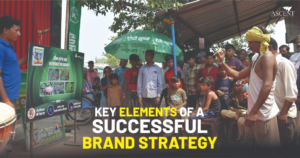
- Haat and mela activations: Set up stalls, demonstrations, and sampling at weekly markets and local fairs where large numbers of people gather.
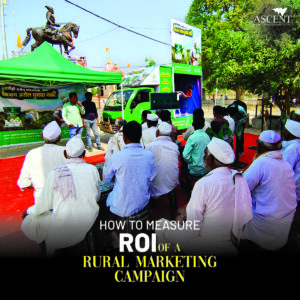
- Van and mobile campaigns: Use branded vans with audio-visual content, product demonstrations, and games to reach multiple villages in a planned route.
- Product demonstrations: Show the product working in real conditions. For agricultural inputs, field demonstrations and demo plots are especially effective.
- Community events: Organise farmer meetings, health camps, women’s group sessions, or school programmes linked to your category.
- Wall paintings and local outdoor media: These remain effective for building lasting visibility in villages and on rural roads.
Activation creates direct interaction, gives people proof, and generates word of mouth that continues long after the campaign ends.
Strategy 4: Use Digital Channels Designed for Rural Users
Affordable smartphones and data have made digital a major rural marketing channel. Rural users are highly engaged with video and messaging apps, and many research products online before buying.
How to apply it:
- Short video and YouTube: Create demonstrations, testimonials, and explainers in regional languages.
- WhatsApp: Share useful content that people will forward to family and village groups, such as seasonal tips, offers, and product information.
- Local creators: Partner with regional creators and progressive farmers whose audiences trust them.
- Missed-call and IVR campaigns: These remain useful for reaching users with basic phones or limited data.
- Integrate with field activity: Use digital to promote upcoming activations, and use activations to drive people to your digital channels.
Digital extends reach and keeps the brand visible between field campaigns, but it rarely replaces on-ground presence in rural markets. The strongest results usually come from combining both.
Strategy 5: Get Pricing, Packaging, and Distribution Right
Communication can create interest, but the sale depends on whether the product is affordable and available when the customer is ready to buy. Rural marketers often describe this through four principles: awareness, acceptability, affordability, and availability.
How to apply it:
- Affordable pack sizes: Small packs and sachets make products accessible to households with daily or weekly cash flow. The sachet model, used widely in shampoo and other personal care categories, is one of the best-known examples of rural market innovation in India.
- Durable, functional packaging: Packaging should handle long transport routes, heat, and storage conditions in small shops.
- Strong retailer relationships: The village kirana owner is often the most influential voice at the point of purchase. Retailer engagement programmes, merchandising, and incentives help keep your brand visible and recommended.
- Reliable last-mile distribution: Work with local distributors, sub-stockists, and rural sales networks to ensure consistent stock in smaller towns and villages.
- Credit and financing options: For higher-value products such as two-wheelers, tractors, and appliances, access to easy financing can be the deciding factor.
Strategy 6: Work Through Local Influencers and Community Institutions
In rural India, decisions are rarely made in isolation. Community members, local leaders, and trusted institutions shape opinions and choices.
How to apply it:
- Progressive farmers: Farmers who adopt new practices early often influence others in their village.
- Self-help groups: Women’s SHGs are strong community networks and increasingly important as earners and decision-makers.
- Local retailers and service providers: Mechanics, agri input dealers, and shopkeepers are trusted advisers for many purchases.
- Panchayat and community leaders: Their support can help with permissions, event participation, and credibility.
- Rural entrepreneurs: Models that train local people to sell or promote products, such as HUL’s Project Shakti with rural women entrepreneurs, have shown how community networks can extend a brand’s reach.
When a respected local voice recommends a product, it carries a level of trust that advertising alone cannot achieve.
How to Measure Rural Marketing Success
Measuring rural campaigns requires looking beyond impressions and likes. Useful measures include:
- Growth in sales and distribution across target districts
- Number of villages, haats, and consumers reached through activations
- Product trials, sampling, and demo participation
- Enquiries, missed calls, and dealer walk-ins
- Retailer stocking and visibility at the point of sale
- Brand recall and awareness through field surveys
- Engagement with regional language digital content
Combining field data with digital analytics gives a more complete view of what is working.
Common Rural Marketing Mistakes to Avoid
Brands entering rural markets often repeat the same errors:
- Using urban campaigns with only a translated script
- Treating all rural regions as the same
- Relying on a single channel, whether mass media, digital, or activation
- Launching campaigns without ensuring product availability in local stores
- Ignoring the agricultural calendar and local festivals
- Measuring success only through short-term sales
Avoiding these mistakes can make the difference between a campaign that creates lasting brand presence and one that is quickly forgotten.
How Ascent Brand Communications Can Help
At Ascent Brand Communications, rural marketing is one of our core areas of expertise. We help brands understand rural consumers, plan region-specific strategies, and execute campaigns that reach people in their own villages, languages, and contexts.
Our services cover rural campaign management, brand activation, experiential marketing, agri marketing, and digital marketing. This allows us to build integrated programmes where haat activations, van campaigns, farmer meets, retailer engagement, and regional digital content work together toward the same goal.
Conclusion
Rural India offers significant growth potential, but it rewards brands that invest in understanding it. The six strategies covered here, local insight, regional language communication, on-ground activation, rural-focused digital, the right pricing and distribution, and community influence, work best when used together as part of one consistent plan.
Brands that respect rural consumers, show up consistently, and deliver real value can build loyalty that lasts for generations.
If you are planning to launch or grow your brand in rural markets, [get in touch with Ascent Brand Communications] to discuss a strategy suited to your category and regions.
Frequently Asked Questions
What is rural marketing?
Rural marketing is the process of planning and executing marketing activities to reach consumers in villages and small towns. It covers research, communication, activation, pricing, packaging, and distribution designed around rural needs and behaviour.
What are the most effective rural marketing strategies in India?
The most effective strategies include building local understanding, communicating in regional languages, running on-ground activations such as haat and van campaigns, using rural-focused digital channels, offering affordable packs with reliable distribution, and working with local influencers and community groups.
Why is rural marketing different from urban marketing?
Rural markets differ in language, literacy, income patterns, media habits, and the influence of community and local retailers. These differences require simpler communication, more on-ground engagement, and a stronger focus on trust and availability.
Is digital marketing effective in rural India?
Yes. Rural India accounts for more than half of India’s active internet users. Short video, YouTube, and WhatsApp are particularly effective, especially when content is in regional languages and combined with on-ground activity.
What is a haat activation?
A haat activation is a marketing activity conducted at a weekly rural market. Brands set up stalls, product demonstrations, sampling, and engagement activities to reach large numbers of rural consumers in one place.
How long does it take to see results from rural marketing?
Awareness can build within a few weeks of a well-planned campaign, but trust and loyalty take longer. Consistent presence over multiple seasons usually delivers the strongest long-term results.