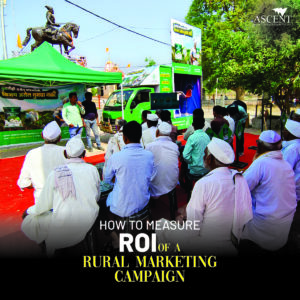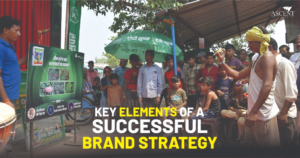
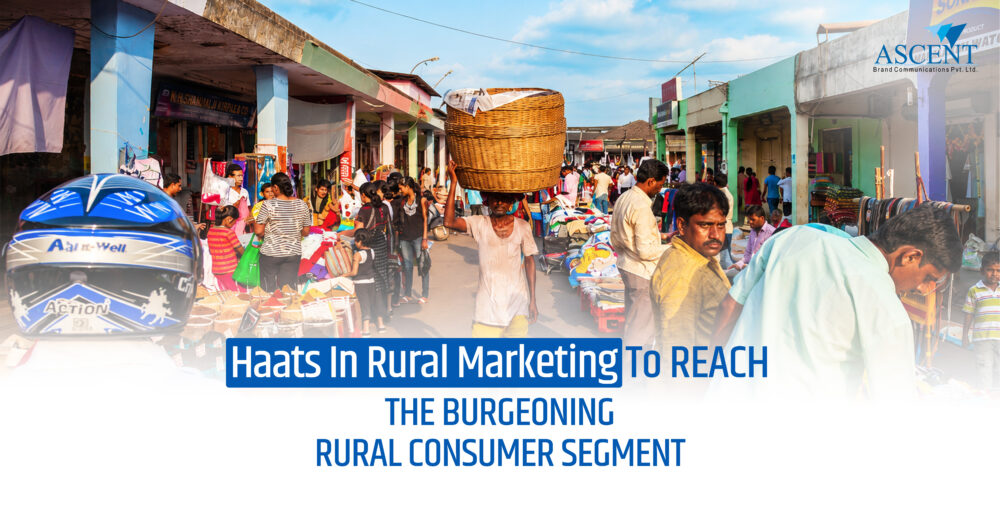
Rural India remains one of the largest and most consistently growing consumer markets in the country, and haats continue to be one of the oldest, most direct ways to reach it. Despite the rise of rural digital and mobile channels, haats have not become less relevant. If anything, they remain one of the few touchpoints where a brand can reach a large, intent-driven rural audience in a single location, in person, on a predictable weekly schedule.
What is a Haat Market?
A haat is an open-air market that functions as a trading hub in rural areas, typically held on a weekly basis. Haats exist to support rural-to-rural trade, and beyond their commercial function, they play a role in turning rural settlements into more active local economic centers.
Haats are the oldest form of organized marketing in India and continue to serve an important role in the rural economy. Alongside buying consumer goods, rural residents use haats to sell surplus agricultural produce and related goods, which is why haats are sometimes described as traditional rural hypermarkets.
Haats: Mobile Supermarkets of Rural India
Picture a haat and the image that comes to mind is usually accurate: a bustling open market with rows of carts and vendors, shoppers moving between stalls, and the general energy of a weekly gathering point. What is less obvious from that image is the marketing opportunity underneath it: a haat is, in effect, a recurring, high-footfall touchpoint that brands can plan around.
Advantages of Haats for Businesses
Haats have remained a core rural marketing channel for a reason. They offer several distinct advantages.
They make reaching potential customers easier
Haats function like a rotating department store for rural India. New haats open on a weekly cycle, and each one typically spans several acres with 300 to 500 stalls covering nearly everything villagers need in daily life. With tens of thousands of haats operating across the country, this represents a substantial, recurring opportunity for any consumer brand to reach a rural audience directly.
They provide genuine opportunities for engagement
Haats sell everything from furniture and clothing to durables, jewelry, cattle, and machinery. Because people typically arrive at a haat already intending to buy, brands have a real opening to run promotional activities and interactive engagement that captures attention at the point of intent.
Their appeal drives repeat visits
Haats have evolved into something closer to a rustic showroom over time, since most of the target audience shops on the same weekly haat day. This regularity, combined with fresh produce, the ability to buy in bulk for the week, and the bargaining culture rural shoppers value, makes haats a dependable congregation point for marketers.
They work well for brand promotion, less so for brand building
Haats tend to favor promotion over long-term brand positioning. Bargain-focused shoppers are more likely to remember a low price than a brand’s image. This makes haats particularly effective for product sampling and display, where a large captive audience matters more than a polished brand narrative.
What Rural Haats Look Like Today
According to the Rural Marketing Association of India, the majority of stalls at rural haats trade agricultural produce, followed by manufactured goods including FMCG products, processed food, handicrafts, forest products, services, and meat and poultry. FMCG, automotive, and agri-input companies have built sustained rural haat activity over time and continue to see returns from it.
Early movers into rural haats included FMCG majors like Hindustan Unilever, Procter & Gamble, and Dabur. Since then, companies across infrastructure, automotive, cosmetics, pharmaceuticals, and banking have followed, recognizing that a weekly haat visit is now a normal part of rural go-to-market activity rather than an unusual tactic.
State Bank of India’s haat activation in Durg Bhilai, Chhattisgarh, is a useful example of how far this channel can extend beyond traditional FMCG use cases. The activation generated strong interest in mutual fund products from a small village audience, demonstrating that haats can support financial literacy and investor education efforts, not just product sales, when approached with the right messaging.
How Big Brands Have Approached Haats
- Colgate distributed free samples and toothbrushes at haats to build oral health awareness, positioning its product as a direct substitute for neem twigs, charcoal, and salt-based alternatives still common in rural areas.
- Dabur promoted its hair oil as an alternative to mustard oil and paired product visibility with health camps to build trust alongside product exposure.
- Sonata used haat displays to build watch category awareness among rural consumers less familiar with the product.
- HUL organized Shakti Days within its Project Shakti program, turning haats into a combined sales and engagement event for its rural distribution network, which also helped its Shakti Ammas move stock quickly.
Making Haats the Nerve Center of Your Rural Marketing Approach
Rural India remains one of the fastest-growing consumer markets globally, and haats remain one of its most direct entry points. Getting real value from this channel requires treating it as a long-term touchpoint rather than a one-off activation: understanding the specific haat’s stall composition, footfall patterns, and audience needs before planning an activation, and building continuity across multiple haat cycles rather than a single appearance.
FAQ Section
How many haats operate across rural India?
Estimates place the number in the tens of thousands, with haats typically operating on a weekly cycle across different locations.
What kinds of products are commonly sold at haats?
Agricultural produce makes up the largest share of stalls, followed by manufactured goods, particularly FMCG products, along with processed food, handicrafts, and services.
Are haats better suited to brand building or brand promotion?
Promotion. Haats work well for sampling, visibility, and price-driven engagement, but are less effective for long-term brand positioning compared to sustained multi-channel campaigns.
Can non-FMCG brands use haats effectively?
Yes. SBI’s mutual fund activation in Durg Bhilai shows haats can work for financial and service-based categories when the messaging is adapted to the audience’s context.