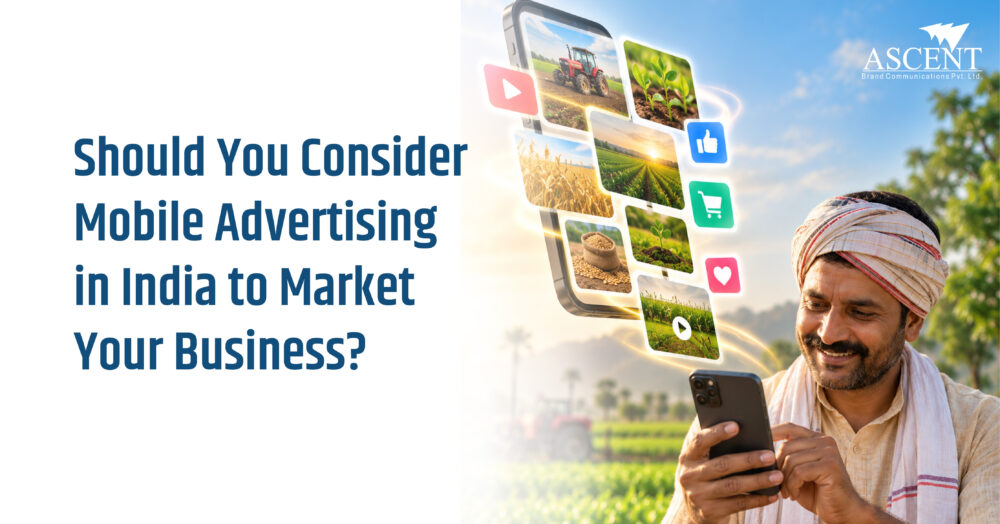
Most people in India now spend more time on a smartphone than on any other device. That single fact has quietly reshaped where advertising budgets go. For a business deciding where to put its next marketing rupee, the question is no longer whether mobile advertising is relevant. It is whether your specific business is set up to use it well.
This article looks at where mobile advertising in India stands today, what it actually involves, and how to judge whether it deserves a place in your marketing plan.
Mobile Has Become the Dominant Advertising Channel
Digital advertising overtook television as India’s leading ad channel for the first time in 2026, and mobile is the main reason why. Mobile platforms now account for roughly 78 percent of total digital ad spend in the country, reflecting how firmly the smartphone has become the primary screen for shopping, content, and everyday decision-making.
India’s overall digital advertising market is projected to be worth close to 15 billion US dollars in 2026, with FMCG and e-commerce brands together accounting for a large share of that spend. Social media alone makes up around 29 percent of digital ad revenue, most of it consumed and served through mobile apps rather than desktop browsers.
The pattern is consistent across reports: as more Indians come online through affordable smartphones and cheaper data, advertising budgets are following them onto mobile, not staying on desktop or traditional media.
What Mobile Advertising in India Actually Covers
Mobile advertising refers to any paid ad format designed specifically for smartphones and tablets. This includes:
- Search and display ads shown within mobile browsers
- In-app ads on platforms like Instagram, YouTube, and news or gaming apps
- Video ads, including short-form and in-stream formats
- Native ads that blend into app or content feeds
- Rich media and interactive formats, such as playable ads for app promotion
Unlike a billboard or a print ad, mobile advertising can be shown to a defined audience, measured in real time, and adjusted mid-campaign based on how people are actually responding.
Why Businesses in India Are Shifting Budget to Mobile
Lower Cost of Entry Compared to Traditional Media
Most mobile ad formats run on a cost-per-click or cost-per-impression basis, meaning a business only pays when someone actually engages with or sees the ad. This makes it possible to test a campaign with a modest budget before committing larger spend, something traditional print or outdoor advertising rarely allows.
Precise, Real-Time Targeting
Mobile ads can be targeted by location, age, device type, app usage, and browsing behavior. A restaurant can show ads only to people within a two-kilometer radius during lunch hours. A financial services brand can target users who have recently searched for loan-related terms. This level of precision is simply not available through traditional advertising.
Content That Travels Well
Mobile ad formats are built for short attention spans: a strong headline, a clear image, and a simple next step. This same simplicity makes mobile ad creative easy to adapt into shareable social content, extending reach beyond the paid placement itself.
Fast, Measurable Feedback
Click-through rates, engagement, and conversions can be tracked from the moment a campaign goes live. This allows a business to identify underperforming creative or targeting quickly and reallocate budget within days rather than waiting for a campaign cycle to end.
Where Mobile Advertising Fits Best
Mobile advertising tends to work particularly well for:
- Local and hyperlocal businesses, such as restaurants, retail outlets, and service providers, using location-based targeting to reach nearby customers.
- App-based businesses, where the goal is installs, sign-ups, or in-app purchases.
- E-commerce and D2C brands, especially during high-intent periods like festive sales or new product launches.
- BFSI and FMCG brands, both of which are already among the largest categories of digital ad spend in India.
It is a weaker fit for businesses with very long, complex sales cycles, where a single mobile ad is unlikely to drive an immediate decision and needs to be paired with other channels such as content or email nurturing.
How to Decide If Mobile Advertising Is Right for Your Business
A simple way to evaluate this is to ask three questions:
- Does your target customer spend meaningful time on a smartphone during their buying journey? For most consumer categories in India today, the answer is yes.
- Can you measure a clear action, such as a click, a call, or a purchase, from the campaign? Mobile advertising performs best when tied to a specific, trackable outcome.
- Do you have the creative assets and budget flexibility to test and refine campaigns? Mobile advertising rewards iteration. A single static ad run for months rarely performs as well as a few variations tested and optimized over a few weeks.
If the answers point toward yes, mobile advertising is very likely worth a place in your marketing mix, even at a modest starting budget.
Building It Into a Broader Strategy
Mobile advertising works best when it is not run in isolation. Pairing paid mobile campaigns with organic Social Media Marketing and consistent Content Marketing helps sustain the awareness that a paid campaign builds, rather than letting it fade once the budget stops. For businesses running larger or more complex campaigns across multiple platforms, Programmatic Marketing can help automate targeting and bidding at scale.
Frequently Asked Questions
Is mobile advertising expensive to start with in India?
Not necessarily. Most formats work on a pay-per-click or pay-per-impression basis, so businesses can start with a small test budget and scale up once they see which creative and targeting combinations perform.
What is the difference between mobile advertising and mobile marketing?
Mobile advertising refers specifically to paid ad placements on mobile devices. Mobile marketing is the broader category, which also includes owned channels like apps, SMS, and WhatsApp communication.
Which industries in India are investing most in mobile advertising?
FMCG, e-commerce, and BFSI currently account for the largest share of digital and mobile ad spend, though local and service-based businesses are increasingly adopting it for hyperlocal targeting.
Final Thoughts
Mobile advertising in India is no longer an experimental channel. It is where the majority of digital ad spend is already going, and that trend shows no sign of reversing. The right question for most businesses is not whether to consider it, but how to start testing it in a way that fits their budget, audience, and sales cycle.
If you want help identifying the right mobile advertising approach for your business, Ascent’s team can help you build and test a plan suited to your market. Get in touch with us to discuss your requirements.