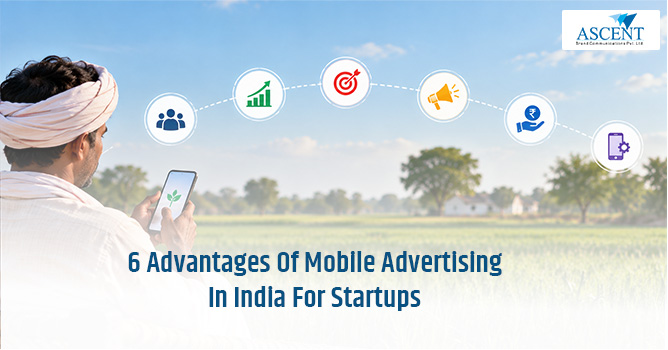
Startups operate with limited budgets and a constant need to prove return on every rupee spent. This makes the choice of advertising channel a genuinely strategic decision, not just a creative one. Mobile advertising has become the clearest answer to that challenge in India today.
Mobile platforms now account for 78 percent of total digital ad spending in the country, according to the ET Brand Equity-Ipsos State of Digital Marketing in India report for 2025-26. With more than 600 million smartphone users nationwide and 5G adoption crossing 480 million subscribers, the smartphone has firmly become the primary screen through which Indian consumers discover, evaluate, and buy. For a startup trying to reach the right audience without overspending, this shift is an opportunity worth building a strategy around.
What Is Mobile Advertising?
Mobile advertising refers to advertisements designed specifically for smartphones and tablets. It covers a wide range of formats, including text-based ads, banner ads, in-app video, rewarded ads within mobile games, and native placements within social media feeds. What sets mobile advertising apart from traditional formats is that every ad is built to fit naturally within how people already use their phones, rather than interrupting a separate viewing experience the way television or print does.
1. Precise Geo-Targeting
Because people carry their phones everywhere, mobile advertising allows marketers to combine location data with details such as age, gender, and shopping habits to build highly targeted, location-based campaigns. A startup can, for example, trigger an offer notification the moment a potential customer is near its store or service area, which meaningfully increases the likelihood of a visit or purchase.
This level of precision means a startup is no longer paying to reach an entire city or region. It is paying to reach the specific group of people most likely to respond, which directly improves return on ad spend.
2. Strong Cost Efficiency
Cost is often the deciding factor for a startup choosing between advertising channels, and mobile advertising consistently comes out ahead. Because targeting is so precise, budgets are spent reaching people who are genuinely likely to engage, rather than a broad, undifferentiated audience.
The cost of producing a mobile campaign is also a fraction of what a television or radio production typically requires. India’s mobile advertising market itself reflects this efficiency at scale, expanding at a rate of over 22 percent year-over-year in 2026, driven largely by budget-conscious brands shifting spend away from traditional formats. For a startup, this means the ability to run frequent, iterative campaigns and test messaging without the financial risk that comes with traditional media buys.
3. Rich Creative Formats That Drive Engagement
Indian smartphone users check their devices around 80 times a day and spend close to five hours daily on mobile, a sharp increase from just two hours in 2010. That level of attention has made mobile one of the most effective environments for creative, high-engagement advertising formats.
Short-form video, interactive banners, and native in-app placements allow startups to build a stronger visual and emotional connection with their audience than static formats typically allow. Since consumers already spend a significant share of their day inside social media and shopping apps, well-designed mobile creative tends to blend naturally into that experience rather than feeling like an interruption.
4. Personalized Advertising at Scale
Mobile advertising makes it possible to adapt messaging to individual user behavior, using signals such as browsing history, app usage, and past purchases. This allows a startup to move beyond generic messaging and build campaigns that reflect what a specific user actually wants or needs.
Personalization at this level helps convert casual mobile users into engaged, returning customers, since the advertising feels relevant rather than random. For an early-stage brand still building its customer base, this kind of targeted relevance can meaningfully shorten the path from first impression to conversion.
5. Constant, Always-On Accessibility
Mobile apps have become a near-constant part of daily life for Indian consumers, and startups that advertise on mobile benefit from the ability to stay visible around the clock rather than being limited to fixed broadcast windows. A well-planned mobile campaign can reach a customer at the exact moment they are considering a purchase, whether that is early morning or late at night.
This always-on nature is particularly valuable for startups competing for attention against larger, more established brands, since it allows smaller companies to maintain consistent visibility without the scheduling constraints of traditional media.
6. Interactive Formats That Deepen Engagement
Mobile advertising increasingly includes interactive formats such as playable ads, in-app contests, and gamified promotions that reward users for participating rather than simply viewing. These formats tend to hold attention longer than static ads and give startups a natural way to encourage trial, sign-ups, or purchases.
Interactive advertising also creates a two-way relationship between a brand and its audience. Rather than simply delivering a message, it invites a response, which is often the first meaningful step in turning a new user into a loyal customer.
Building Mobile Advertising Into a Complete Strategy
Mobile advertising works best when it is not treated as a standalone tactic but as one part of a broader mobile strategy. Startups that pair paid mobile advertising with a well-built mobile app marketing plan create a more complete funnel, guiding new users from an initial ad impression all the way to app installation and ongoing engagement.
Direct channels such as WhatsApp marketing can also extend the value of a mobile advertising campaign significantly, allowing startups to follow up on initial interest with personalized offers, order updates, and customer support in a channel Indian consumers already use daily.
Final Thoughts
For startups in India, mobile advertising is no longer an optional add-on to a marketing plan. With mobile now driving the large majority of digital ad spend nationwide, it has become the primary channel through which new brands build awareness, generate leads, and earn early customer trust, all while keeping costs manageable enough to compete with larger, better-funded competitors.
The startups seeing the strongest results are the ones treating mobile advertising as a connected system, one that combines precise targeting, strong creative, and complementary channels like app marketing and WhatsApp, rather than a single isolated campaign.
If your startup is ready to build a mobile advertising strategy suited to your specific market and audience, explore Ascent’s mobile marketing services to see how a coordinated approach can help you grow faster with a leaner budget.