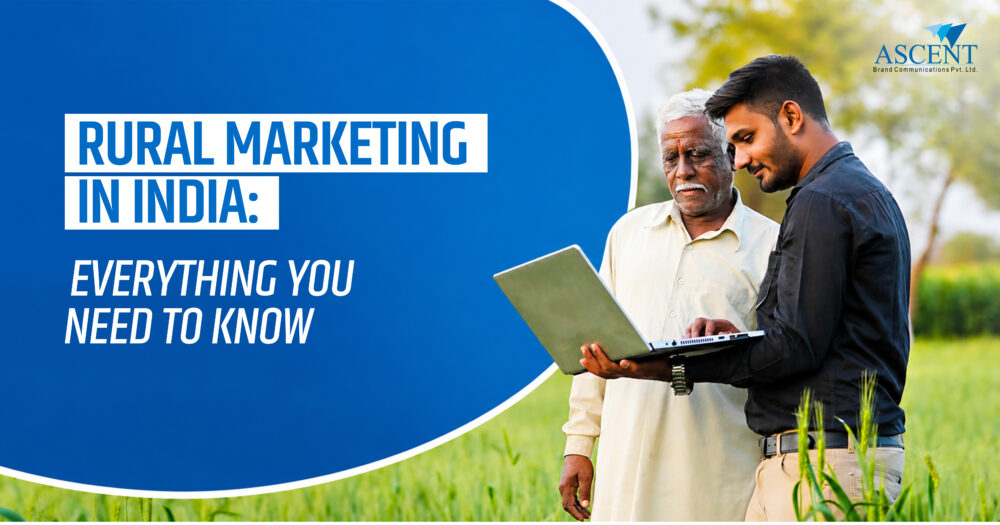
What is Rural Marketing in India?
Rural marketing brings together a well-developed product, fair pricing, proper placement, and adequate awareness, planned and implemented specifically for India’s rural markets. It is not urban marketing scaled down. It requires its own approach to product, pricing, distribution, and communication built around rural realities.
Scope of Marketing in Rural India
Rural India represents roughly two-thirds of the country’s total population, a base large enough that even modest gains in market share translate into meaningful revenue. The rural FMCG sector alone has continued to grow ahead of overall market averages, with recent industry reporting from KPMG and IBEF noting that rural markets have outpaced urban growth in several recent quarters and that rural India is increasingly leading in premium product categories, not just volume-driven staples.
Rural consumers are also no longer settling for lower-quality alternatives to what is available in cities. Multiple industry studies, including Accenture’s research on rural consumer behavior, have found that rural buyers actively seek branded, high-quality products and are willing to pay for them. This shift is a large part of why rural consumer markets have continued to grow faster than urban ones in recent years, and why a rural marketing plan needs to account for rising rural aspirations rather than treating the audience as price-sensitive by default.
Capturing this potential still requires a plan built around the specific characteristics, attitudes, and social dynamics of rural communities, rather than a repurposed urban campaign.
Factors Contributing to the Growing Popularity of Rural Marketing in India
Several connected trends explain why businesses continue to increase their focus on rural India.
Rising Internet Penetration
Rural internet adoption has continued to climb well past where it stood a few years ago. Rural users now make up more than half of India’s active internet base, a shift that has directly driven growth in online rural shopping, with more rural consumers using smartphones to research and order products.
Improved Networking and Information Access
Rural consumers increasingly draw on multiple information sources before making a purchase decision, supported by expanded media and telecom reach. This gives businesses more ways to influence rural purchase decisions than direct sales contact alone once allowed.
More Employment Opportunities
Employment in rural India has continued to grow, supported by ongoing rural development programs, which has strengthened the underlying purchasing power that rural marketing campaigns depend on.
Rising Rural Income
Rural income continues to grow, and in several recent reporting periods rural income growth has outpaced urban income growth. This continued rise in disposable income is one of the clearest structural reasons rural markets keep attracting business investment.
Types of Rural Marketing in India
Rural Periodic Marketing
Conducted at haats, melas, and mandis, where large numbers of people gather regularly. Haats work well for promotion, while mandis serve as a strong touchpoint for farmers immediately after crop sale, making them a strategic point for higher-ticket categories like consumer durables and automobiles.
Rural Retail Marketing
Focused on building brand awareness directly at rural retail counters through visual merchandising and clear product communication. Strong rural market research is essential here, since it is what allows a brand to connect emotionally with the audience rather than relying on generic messaging.
Rural Van Marketing
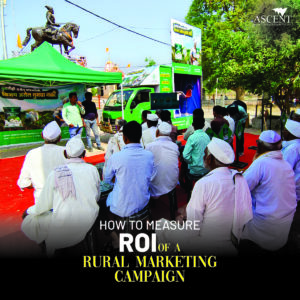
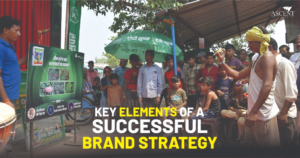
Vans equipped with exhibit panels, manpower, and audiovisual equipment bring product demonstrations, sampling, and engagement activities directly into villages, supported by tailored communication.
Rural Influencer Marketing
Despite continued digital growth, local influence still carries significant weight in rural communities. Teachers, panchayat members, Anganwadi workers, and village-level entrepreneurs continue to shape purchase decisions through trusted, local-language communication.
Rural Digital Marketing
Digital consumption in rural India has grown substantially, with rural audiences driving strong growth in video, social media, and OTT usage. This makes Facebook marketing, YouTube marketing, video promotion, and search engine optimization increasingly central to rural marketing plans, alongside traditional offline tactics.
Rural Mobile Marketing
Mobile remains the primary access point for rural internet use, and mobile-first purchasing behavior has continued to strengthen. WhatsApp, SMS campaigns for feature phone users, and voice-based outbound and missed-call marketing remain effective, practical tools for reaching audiences with lower smartphone penetration.
Final Thoughts
Rural India’s scale, rising income, and continued digital growth make it one of the more consistently attractive markets for businesses willing to build a strategy around its specific characteristics rather than adapting an urban one. Working with a rural marketing agency that understands both the research and the execution side, from haats and vans to digital and influencer channels, remains one of the more reliable ways to convert this potential into measurable results.
FAQ Section
What makes rural marketing different from urban marketing in India?
Rural marketing requires adapting product, pricing, distribution, and messaging to rural infrastructure, language diversity, and buying behavior, rather than scaling down an urban campaign.
Which type of rural marketing works best for high-ticket products?
Mandis are particularly effective for high-ticket categories like automobiles and consumer durables, since farmers often have cash on hand immediately after crop sales.
Is digital marketing effective in rural India?
Yes. Rural digital adoption has grown substantially, particularly in video and social media consumption, making digital channels increasingly important alongside traditional rural marketing methods.
Why is rural influencer marketing still relevant given rising digital access?
Local trust figures such as panchayat members and village-level entrepreneurs continue to carry significant influence over purchase decisions, even as digital access expands.